Maximilian shared in his story last year that he explored many other cultures at home while growing up as he lived in Cologne, one of the most multicultural cities in Germany. However, he couldn’t afford big travels until he had saved up enough money in his mid-twenties. He went road tripping in the USA, the beginning of many travel adventures, and bought his first camera in 2015. Now, the natural environment drives his passion for photography and he is committed to protecting it. The story behind the winning photo of week 3 conveys that too.
“The Aletsch Glacier is the largest and longest glacier in the Alps. Due to increasing global warming, this large glacier, like all other Alpine glaciers, is now retreating at a much faster rate. This was the reason why we decided to visit this glacier as soon as possible.
The evening before the winning photo was taken we were already up at the summit of the Eggishorn, but without any good conditions. Due to rockfalls, we decided against bivouacking there and went back to the cable car. In one of the small local huts up there, light unexpectedly burned. As we curiously took a look inside, we recognized a group of young women. One of them was the daughter of the owners; such a lucky coincidence! In addition to warm cocoa and a good conversation, we were allowed to spend the night in the actually closed to the public, warm hut.
The next morning, we set off together for sunrise to the summit of the Eggishorn again. Unfortunately, the dense fog initially didn’t allow us a good sight or photos. Suddenly though, the seemingly protective fog gave way and showed us one of the dramatically diminishing wonders of our Earth – the eternal ice!
The temperature at glaciers feels even lower than it actually is, and the wind adds up to the bitter cold feeling. However, when the fog suddenly moves away and such a stunning view is revealed, you quickly forget how cold it actually is. Good, warm, and proper clothing also make an essential difference.
With this shot, I wanted to showcase Human vs. Nature. Show the massive size of this natural wonder. Often it is difficult to express how big something actually is in just a picture. Therefore, we were lucky that the group of women came along for the sunrise and Flurina was able to position herself in such a way that I got the necessary scaling point.
Taking the shot wasn’t too easy since the fog was moving very fast and Flurina was getting cold standing there. The goal ultimately was to be able to see the glacier as clear as possible, but still have the person framed by the fog. Fog always adds a little extra touch.
With the edit, I wanted to keep the image simple and cool. An uninvolved person should be able to feel the cold while marveling at the structure of this fascinating glacier. For me, when editing, on the one hand, it’s important that I convey in the image what I felt during the moment. On the other hand, photography is an art and I really want to let my creativity free. Just like everyone else should be doing while photographing and editing.
For this photo, I first increased the depths for more texture while reducing the highlights to keep the image from looking too garish. To prevent losing brightness, I increased the whites, reduced the contrast, and balanced the blacks. Since I’m not a fan of adding clarity, I increased the removal of haze instead. In the gradation curve, I edited mostly the shadows/dark parts of the image. To stick to the cold look, I decreased the saturation in all colors. Additionally, I increased the luminance in the blue and magenta tones. I also used more cold tones in the split toning. Finally, I got down to the fine details of the image. Therefore I lightened the rocks in the foreground to create a less harsh contrast with the glacier and the mountains around it. Afterward, I lowered the clarity of the fog again a bit and added a slight bit of brightness.
Move RIGHT or LEFT to compare
Whether consciously or unconsciously, I am convinced that you learn something new every day. This morning, at least, I became more aware once again of how precious our nature is. It warms our heart, lets us switch off, and lose ourselves in the landscape for a few minutes. It gives us strength for the future, lets us reorientate, and never gives up trying to convince us of its beautiful side. I hope that in the future more and more people, governments, and countries will understand this.”
Would you like content like this sent to your inbox?

What makes a nature photograph memorable? For Julie Chandelier, it goes beyond finding extraordinary subjects. It’s about observing closely, trusting your intuition, and noticing the details others might overlook. In this article, she shares her approach to composition, abstraction, simplicity, and creating more evocative images.
An early morning adventure in Madeira led to an unexpected photograph and a story worth sharing. Maria Almyra reveals how patience, persistence and a little family teamwork shaped her award-winning image and continue to inspire her photography.
From mist-covered Welsh hillsides to unexpected encounters with newborn lambs, photographer Evan Dunsford shares his approach to wildlife photography, the importance of patience and composition, and the lessons that continue to shape his relationship with the natural world.
Swedish landscape photographer Finu Bruseby won Nomadict’s Best of the Week with a sunrise captured from above a fog-swallowed town. In this feature, Finu shares where the passion for nature began, the lessons learned in the field, and the story and process behind the winning image.
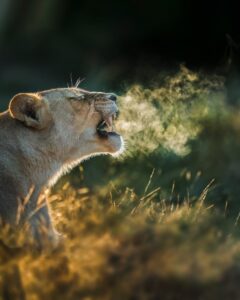
Alexandra Surkova shares how an unexpected gift sparked her passion for wildlife photography, the lessons that shaped her approach in the field, and how projects like Future Guardians and Wild Voices use photography to inspire wildlife conservation.
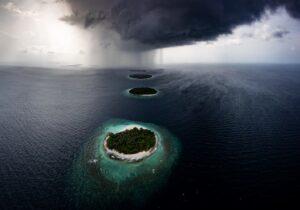
Inspired by a love of nature, exploration, and unexpected moments, Joana captures the Maldives in a different light. Discover how a stormy afternoon, four perfectly aligned islands, and a cinematic editing approach came together to create an image that feels more like a real moment than a postcard.
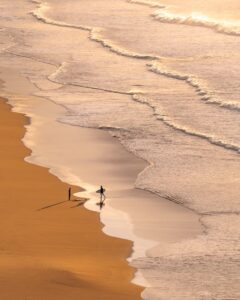
Désirée Stoll traces her path from a first solo trip to Königssee to a body of work built on light, patience and emotional honesty. She shares four lessons from years of shooting outdoors, the story behind her Best of the Week image of two surfers on the Spanish coast, and why printed work changed how she sees photography.
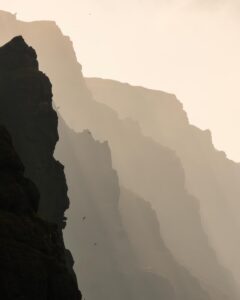
In this article, Julien shares how to develop a personal style through atmosphere, minimalism, and color in nature photography, from what he looks for before ever raising his camera to the editing choices behind his most meaningful images.