Photo tour in Azores, Portugal
Join us in the Azores for a unique photo tour, where you’ll elevate your creative skills with expert guidance from Ronald Soethje, Bruno Ázera, and Nomadict.
Jonathan created one of his favorite series in Iceland, where he set aside dedicated time for creating and permitted himself to experiment. In his article, we learn about his most valuable experiences at home and abroad and dive into his essential strategies to capture your best work without feeling pressure.
In my mid-20s I had the privilege to study abroad for several semesters in the US and Mexico. While studying, I also had the freedom to explore the country and its culture. This triggered the desire to get to know more about the beautiful planet we live on. Once I started working, I had the chance to live and work in South Korea for six months. Being completely on my own in a foreign country was a very special experience for me and I enjoyed the freedom to use my time available the way I wanted.
What I liked the most about traveling on my own was that meeting or getting in touch with other travelers or locals had become so much easier and in my opinion; the true experience of a country is something you get through people.
Photography came into my life much later. The birth of my daughter three years ago made me get my first camera gear. Initially motivated by capturing the moments in her life has led to a deep passion for photography with a strong focus on landscape and people photography.
From the very beginning, I focused on understanding the settings of the camera and how to find the right settings to master exposure in particular situations. I tried to avoid automatic mode as much as possible and experimented a lot with manual settings. However, it is one thing to understand how your camera works and how you find the right settings, and the creation of a great picture is a whole other story. I have watched countless online tutorials about the theory and experimented for many hours outdoors. It was undoubtedly worthwhile, as I am looking back to an intense and steep learning curve.
I would be lying if I said I was not proud of my personal development, and yet, I am aware there is great upside potential for me to become better in something that triggers so much joy and happiness. Photography has become a very important part of my life that I do not want to miss out on anymore.
Frankly, photography has not only brought me joy and passion, but also a great shift in mindset. The most noticeable impact I feel photography has had on me is that my view of my surroundings has dramatically changed. It feels like I am constantly looking through a viewfinder trying to find subjects and frames. I perceive light, colors, and seasons so much stronger than ever before, and I see compositions everywhere.
I hardly recall any moment when I experienced a sunrise before my passion for photography. Ever since I got into landscape photography, I realized how special this moment is when it transitions from night over dawn to daylight, including all its beautiful colorings of blue and golden hours. It is an incredible experience when the first sun’s rays appear and hit your face.
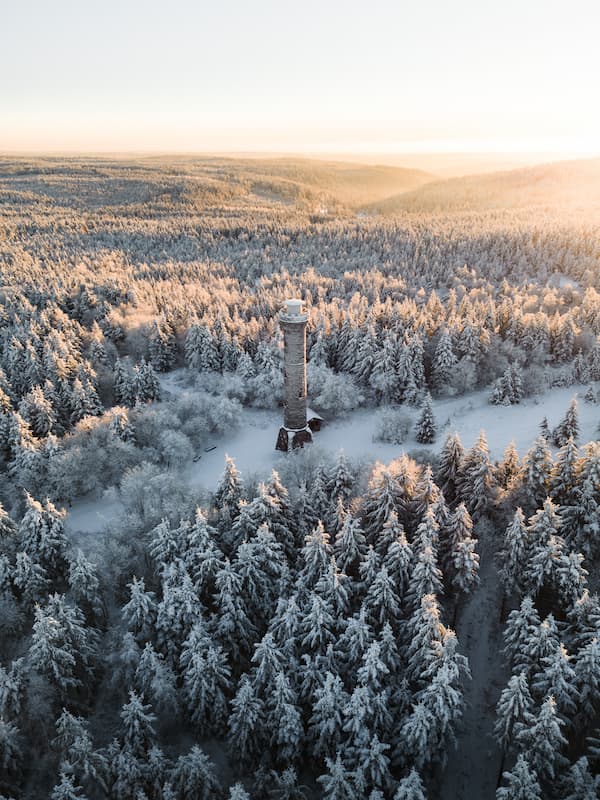
I remember my first sunrise when I got into photography. I aimed to capture the TV tower in the place I live. It was a cold winter morning due to a cloudless and clear night sky. I met several other photographers on the spot having the same idea. Before and during sunrise, I was just overwhelmed by how beautiful it was. Afterward, I asked one guy how he liked the sunrise. While I enjoyed the moment, he said: “there could have been more cloud coverage”. Now after experiencing so many sunrises, I could not agree more. Clouds or fog add a special ingredient to a great landscape photograph when it comes to mood and colors, not only during sunrise. Although a great photograph is always up to the viewer to judge and subjective in general, I think there are certain things that help me to better tell my story:
Subject: a great photo leaves little room for interpretation, the subject is clear as well as the message. Very often, I catch myself capturing a mood or atmosphere. This is not a bad thing, but my best pictures clearly outline a subject the viewer’s eyes perceive as the focal point of the photo.
Light: light in its various forms is a crucial factor as it helps with the texture and color vibrancy of the subject. The light conveys the mood and atmosphere of the moment and ideally triggers emotions. In my opinion, this is the most powerful feature of a great landscape photograph.

Composition: I try to see composition as a tool to draw the viewer’s attention toward the main subject. I do not see it as a hard rule since I tend to break what is commonly known as composition. I love leading lines or reflections the same way I like a picturesque foreground or a very minimalistic shot.
Edit: the editing process is vital too as it helps to bring the photograph to life and supports the story. It is a great way to emphasize all points mentioned above and includes creating a simple crop, removing distractions, highlighting different areas, or making the colors pop. The post-edit defines my style as a photographer.
I have captured some of my best stories in Iceland – It is like candy for every landscape photographer and never disappoints.
It was my second trip to Iceland, and a colleague and I completely focused on photography. We had ten days to travel and aimed to circuit the island, putting a special emphasis on the Eastern and Northern parts of Iceland.
I struggle to remember when I had so much time available in the past dedicated to photography only. Looking back, we were lucky with the weather conditions that allowed us to get the shots we wanted. Our focus was on glaciers, and ice caves, chasing Northern lights while using all the available light during sunrises and sunsets.
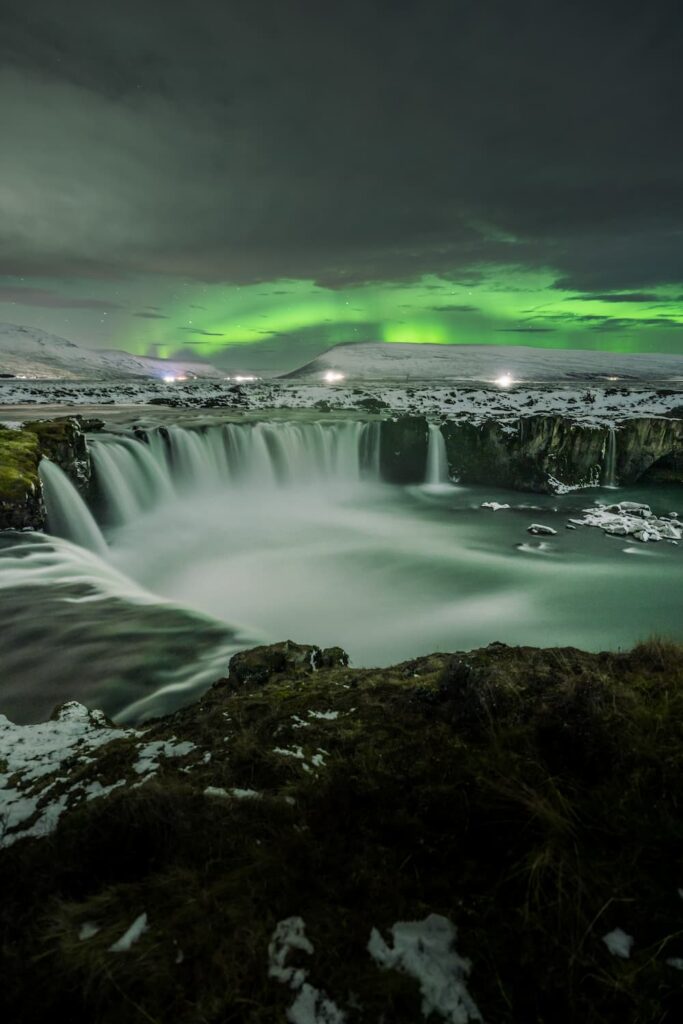
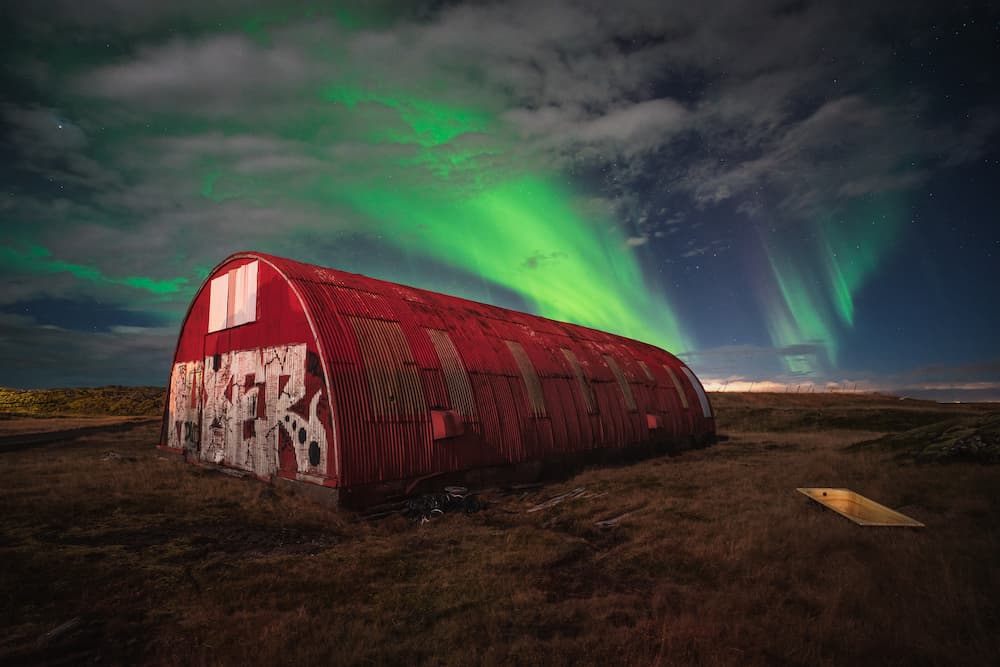
We got really lucky with Northern lights and even though there is an aurora forecast publicly available we followed the strategy to go beyond the forecasted conditions and spend as much time outside during the night as possible. In most cases, this paid off and delivered the experience we aimed for. I also remember the following moment in Iceland to be very special:

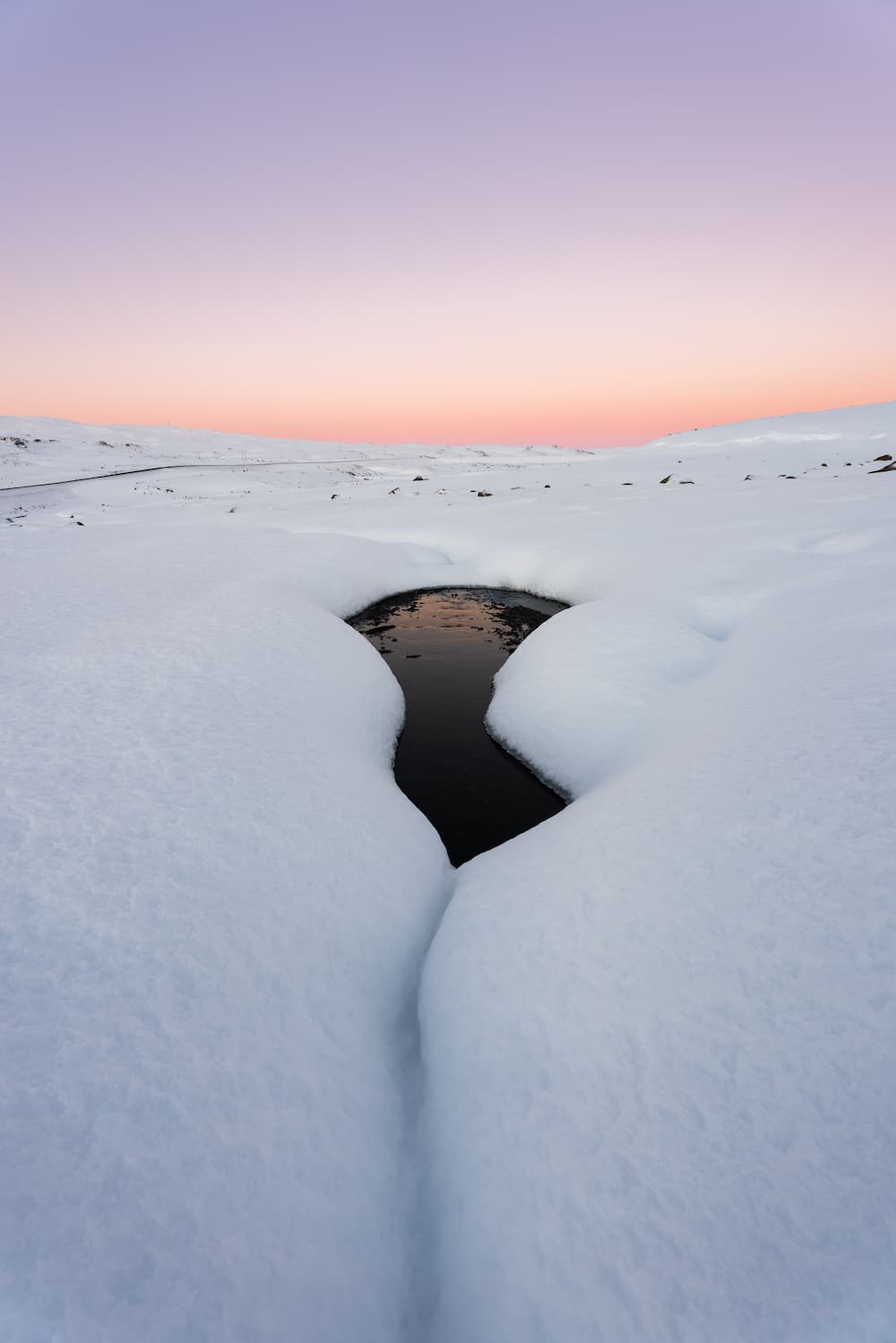
We had our base in Egilsstaðir, and since I was all on my own this morning, I decided to spontaneously drive up the nearby hill toward Seyðisfjörður as on top of the hill you entered a very moody winter wonderland. I had no clear subject identified that morning and had real trouble finding a proper spot to park my car. It was 20 min before sunrise, and the color gradient in the sky was going from purple to orange. Once on the field, I was observing my surroundings to find a subject contrasting with the plain white environment. I was really happy when I found this dark puddle and a natural leading line from the small stream underneath the snow. A very minimalistic picture that always gets me when I look at it.
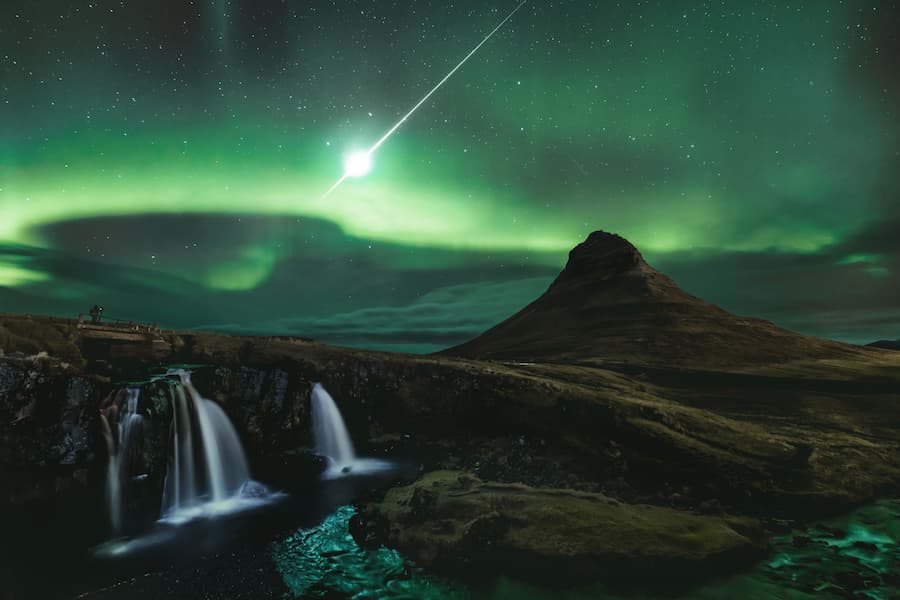
Another image that is close to my heart was captured in Iceland too. It is a photo that is so fully packed with different things happening that it almost looks impossible to be true.
Again in Iceland, we spent one of our last days at Snæfellsnes peninsula in the Western part of Iceland. That night we aimed to capture the Northern lights above the famous Kirkjufell mountain – probably one of the most photographed subjects in Iceland. The spot itself is already very photogenic during the day with its impressive waterfalls serving as the perfect foreground for a great landscape photograph.
That night we experienced a crazy green party going on in the sky. I was taking several wide-angle shots to capture the entire scenery in the frame when out of the blue this shooting star appeared and exploded in the sky with an audible bang. I immediately checked my last shot and could not believe that not even I captured it but also the shooting star was positioned perfectly in the frame. A lucky shot, yes, but a shot that comes with so many impressions and emotions like our entire Iceland trip.
And lastly, the following is another photo I am really proud of, also captured in Iceland:
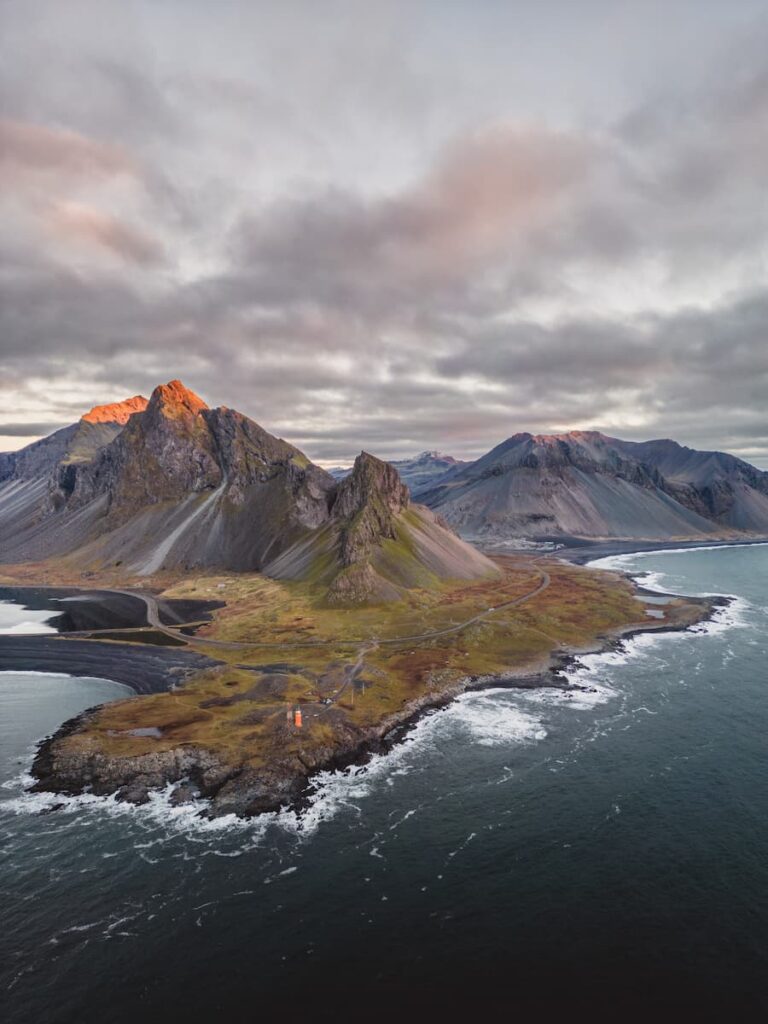
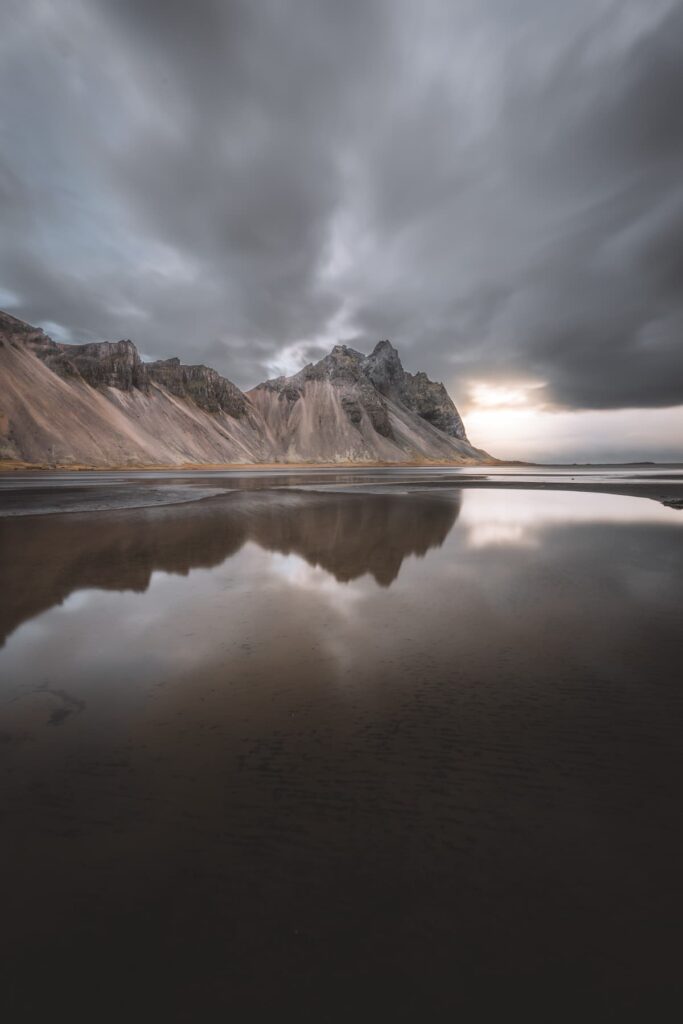
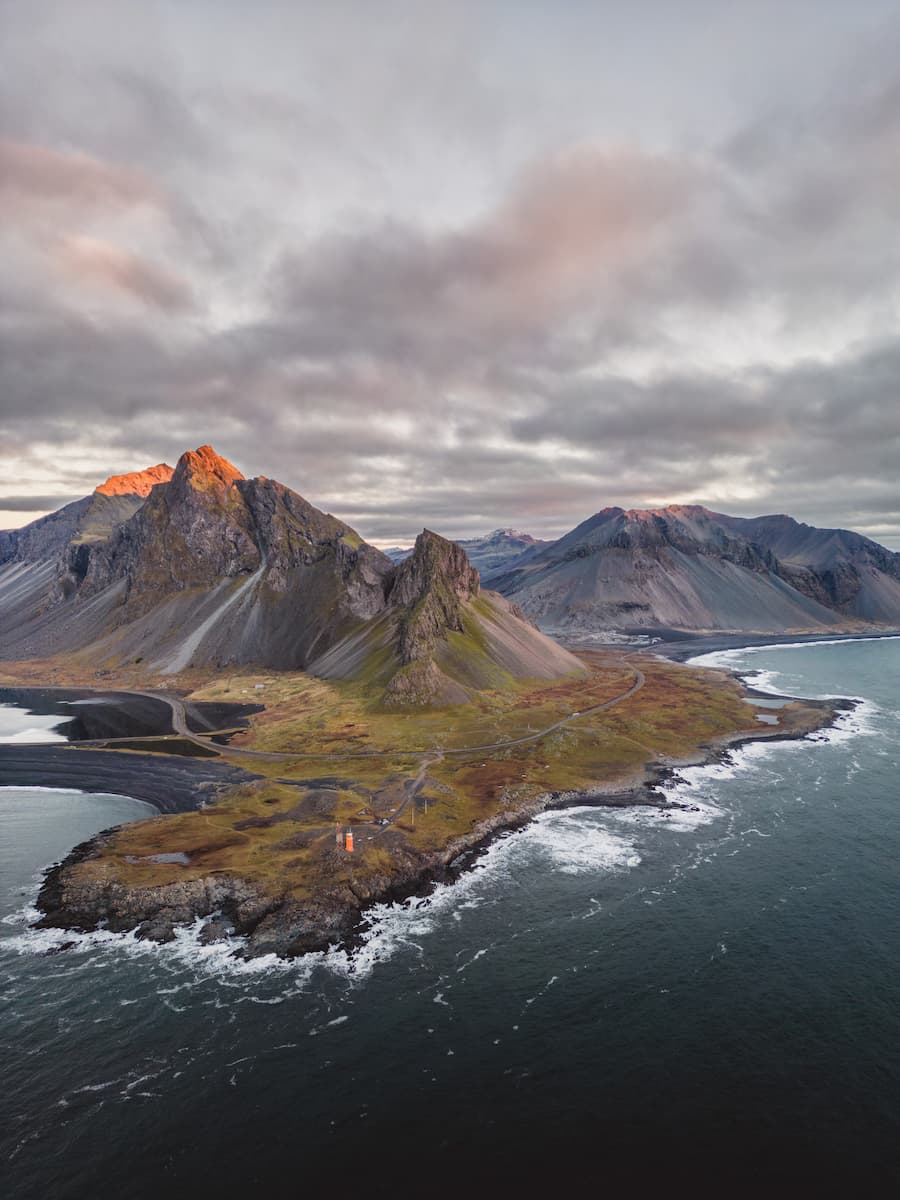
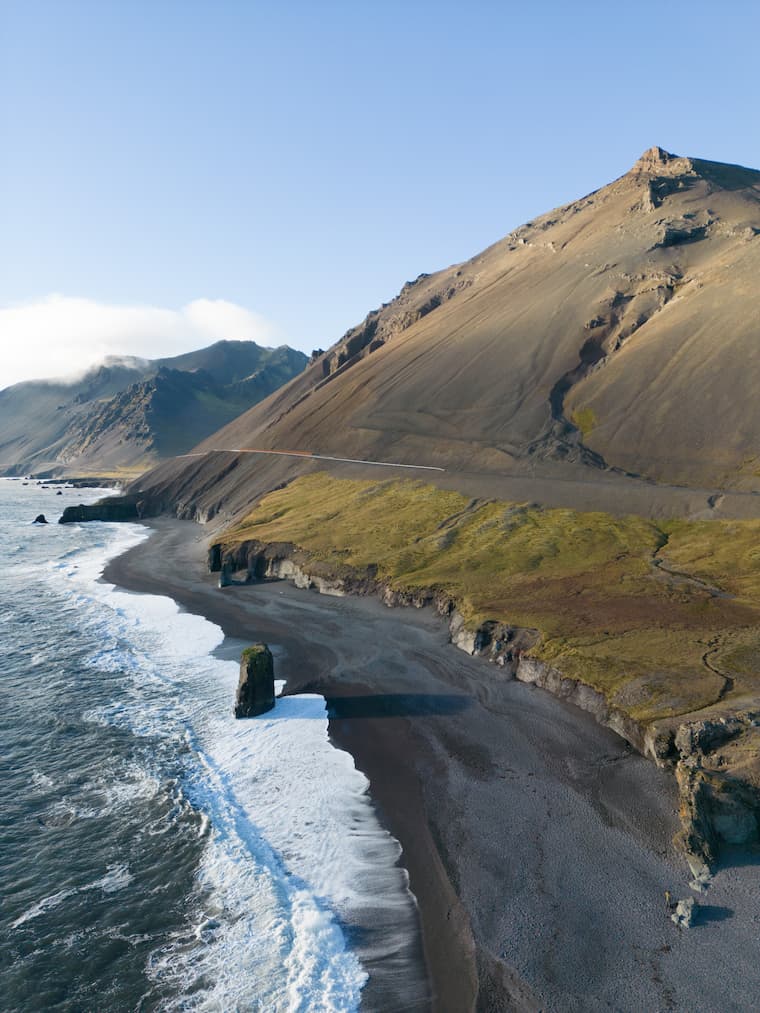
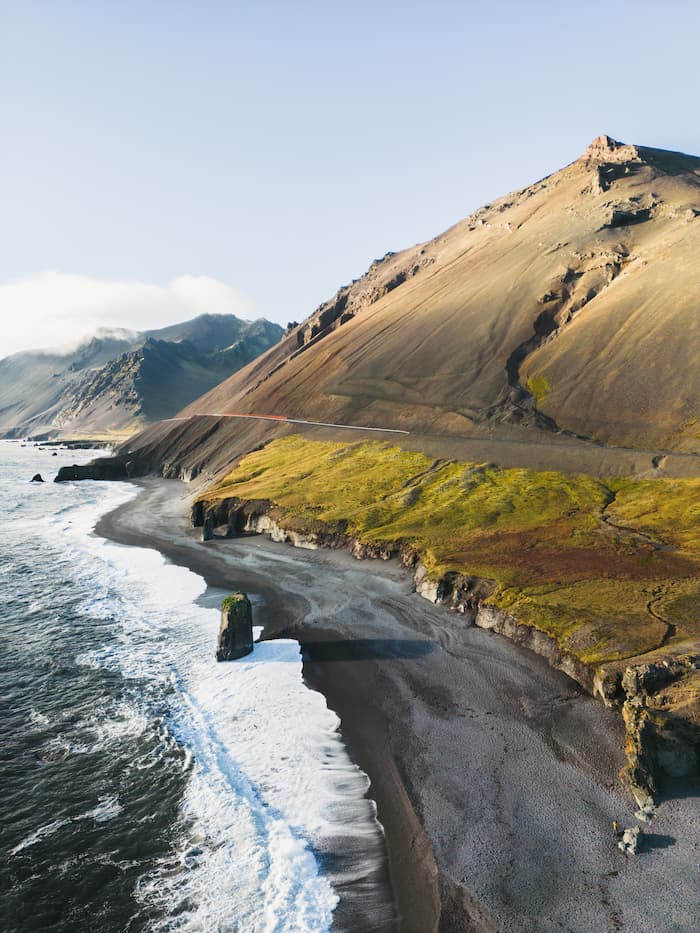
Before we went to Iceland, I did a lot of research about potential locations to visit and photogenic subjects to capture. I found an image online from this small peninsula, Hvalnes, with the iconic Eystrahorn mountain next to a black pebble beach in the Eastern part of Iceland. The coast and picturesque-looking rock formation looked so spectacular that I had to go there.
I drove two hours in the morning to get there to capture the scenery during sunrise. It turns out the area is the perfect playground for photographers as it works both for sunrise and sunset, and you find plenty of different compositions to try. The weather conditions that day were amazing, with about the right amount of clouds in the sky to potentially get colored by sunrise. I took plenty of different shots, and my favorite has the mountain peak dipped in orange by the rising sun and a bit of color captured in the clouds. I love this shot and even have it printed and hung on a wall at home.
For my editing process, I use Adobe Lightroom for color grading and Photoshop for fine-tuning. I edit to draw the viewer to the story I want to tell with the photo. My overall aim is to not alter an image too much from its natural look and keep it as close to reality as possible. My editing process has changed significantly over the last months, and I am obsessed with these earthy tones lately.
Let me share another photo from Iceland (at Lækjavik) with you where I aimed to capture the rock and its shadow from the morning sun as the main subject in a frame surrounded by water and mountains.
I usually approach the editing process with global to local adjustments. On a global level, I applied the following:
1) Adjusted white balance, whites and blacks
2) Reduced highlights and vibrance
3) Added contrast by using the tone curve
4) Brought back colors via HSL
5) I usually do not touch dehaze, saturation, or sharpness.
Locally I use masks and gradients to highlight specific areas of interest by carefully adding clarity and adding contrast. For this photo, I applied local adjustments to the rock and to the nearby moss to make it more pop in color.
Ten years from now, I hope I still follow my passion with the same drive and spirit I do today. I have gained numerous valuable experiences by traveling to new places and I hope to keep improving my photography skills even more. It would be great to share my experience and go on trips with other fellow photographers that share the same passion.
On the other hand, I am also finding lots of fulfillment in portrait photography. I would consider the entire experience of portrait and wedding gigs as an ongoing personal project that has led to many important realizations. It is such a rewarding and motivating feeling to see someone enjoying the photos I took of them and this is what keeps me going.
And to conclude this article, I would like to share with you all some of the most valuable pieces of advice I have collected through this amazing journey to help you create your best work without feeling pressure:
1) Great pictures are no coincidence: the most outstanding pictures we see are no lucky shots. I am convinced great photos are predictable if you research and prepare for the location, weather, and composition. And by doing so, you gain more time to be creative in the field, allowing yourself the freedom to experiment and make mistakes.
2) You can put pressure on the planning and enjoy your shooting time on the location: even though the time window of great light is often limited, I feel it is crucial not to rush or feel pressured when shooting in the field. A thorough preparation and a strong focus on observing surroundings can be helpful. It often helps me to stick to my initial plan and vary a lot with composition and angles.
3) Repetition carries conviction: the more often I go out and practice, the better I become and grow. With every moment outdoors, I gain valuable experiences and never stop learning. It also helps to realize mistakes to prevent them in the future.
4) Share your work and collect inspiration, but do not get lost in comparing yourself with others too much: It is just human to share your work with others and seek appreciation or feedback that helps you improve. Instead of comparing your photos, see the work of others as a trigger to challenge yourself. Reflect on your work from time to time to grow and identify points for improvement.

Join us in the Azores for a unique photo tour, where you’ll elevate your creative skills with expert guidance from Ronald Soethje, Bruno Ázera, and Nomadict.

In this article, Forest shares how years of chasing scale, silence, and raw landscapes shaped his approach to photography, from the deserts of Kazakhstan to the volcanic ridges of Iceland. He talks about how he uses light, texture, and vast negative space to create images that feel both intimate and overwhelming.

Simon shares the journey behind his photography, from early inspirations to field techniques, editing, and the story of the winning shot that shaped his path.

In this article, Miro shares how his love for cinematic music evolved into a deep passion for photography and how he uses light, color, and atmosphere to turn the streets of Prague into living film scenes.

In this article, Stefanie reveals how her background in physics sparked her passion for astrophotography and how she blends science with creativity to capture the beauty of the night sky. Readers will discover her approach to color, contrast, and editing, as well as her aurora photography workflow.

Spanish photographer Yhabril captures the profound connection between humans and the mountains that shaped him. Growing up in the Pyrenees, his work bridges outdoor sports, landscapes, and celestial scenes — often blending athletes, moonlight, and wilderness into striking visual stories.

In this article, Ariane shares how photography helped her navigate personal challenges, connect authentically with people and animals, and develop a philosophy rooted in empathy and artistic freedom. Readers will also discover her ethical approach to wildlife photography and her trusted equipment for both camouflage techniques and cameras.

Discover how to photograph Dutch tulip fields in their most magical light. From choosing the right gear and lenses to mastering composition, color, and aerial perspectives, this guide shares creative techniques to capture the beauty of the Netherlands’ tulips. Learn how light, color grading, and proportion bring emotion into every frame.