Photo tour in Azores, Portugal
Join us in the Azores for a unique photo tour, where you’ll elevate your creative skills with expert guidance from Ronald Soethje, Bruno Ázera, and Nomadict.
In this article, Nick explains how to photograph Dutch tulip fields in their most magical light. From choosing the right gear and lenses to mastering composition, color, and aerial perspectives, this guide shares creative techniques to capture the beauty of the Netherlands’ tulips.

As a young adult, I lived in Asia with my family due to my father’s expat assignment. The frequent travels between our home country, the Netherlands, and Asia made me curious about aviation, as well as capturing all my experiences on camera.
I was able to attend photography classes during international school in Asia, and when we moved back to the Netherlands, I started my flying career at the Flight Academy. I graduated in 2009, when the job market was difficult due to the economic crisis that started in 2008. Luckily, I had the chance to do scenic flights, flying passengers around and showing them the beauty of the Netherlands from the air.


My interest in photography and passion for flying got me to start my own business in aerial photography, although I do not limit my work to just that. Having discovered the Netherlands from above triggered the desire to get to know the country in more detail, particularly the beautiful, large, and colorful fields filled with tulips.
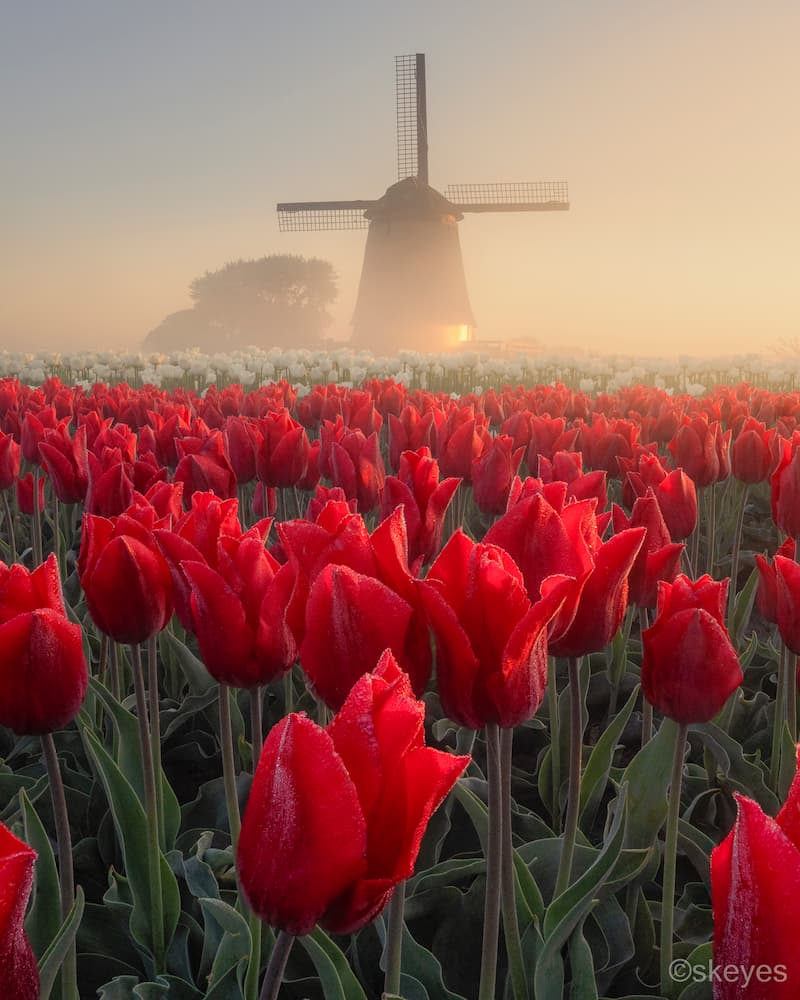
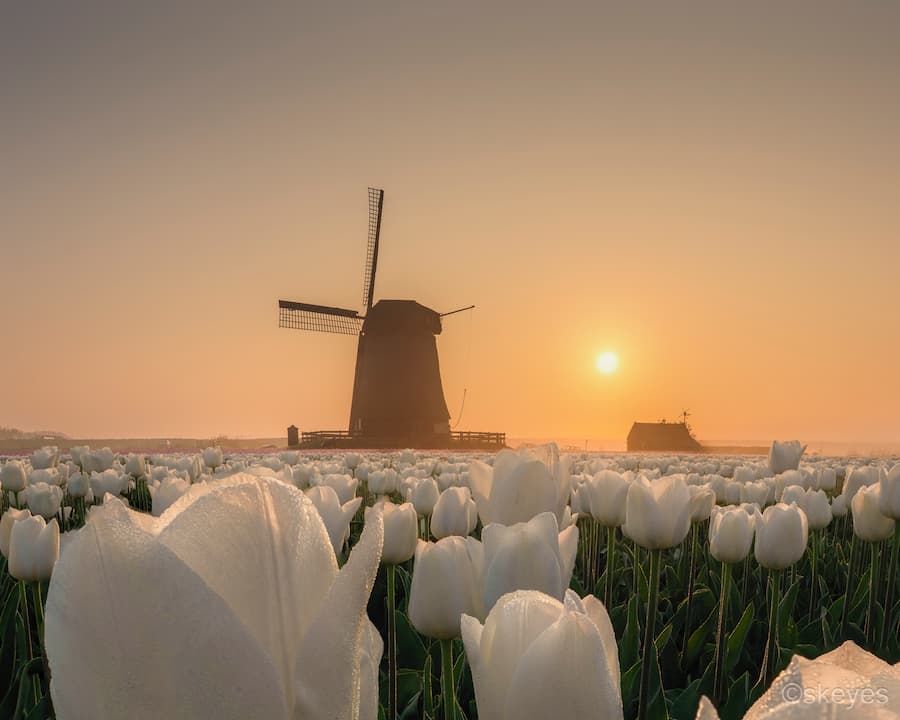
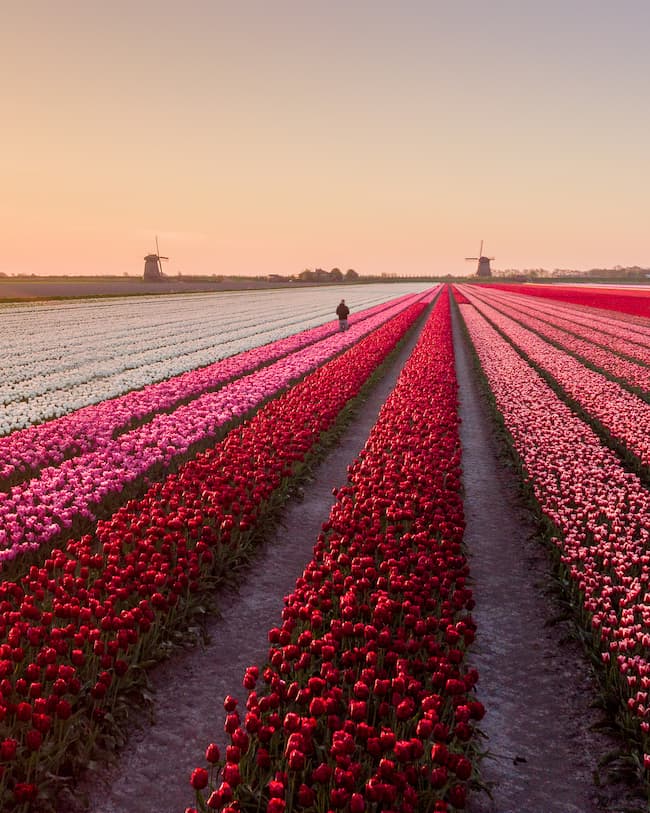
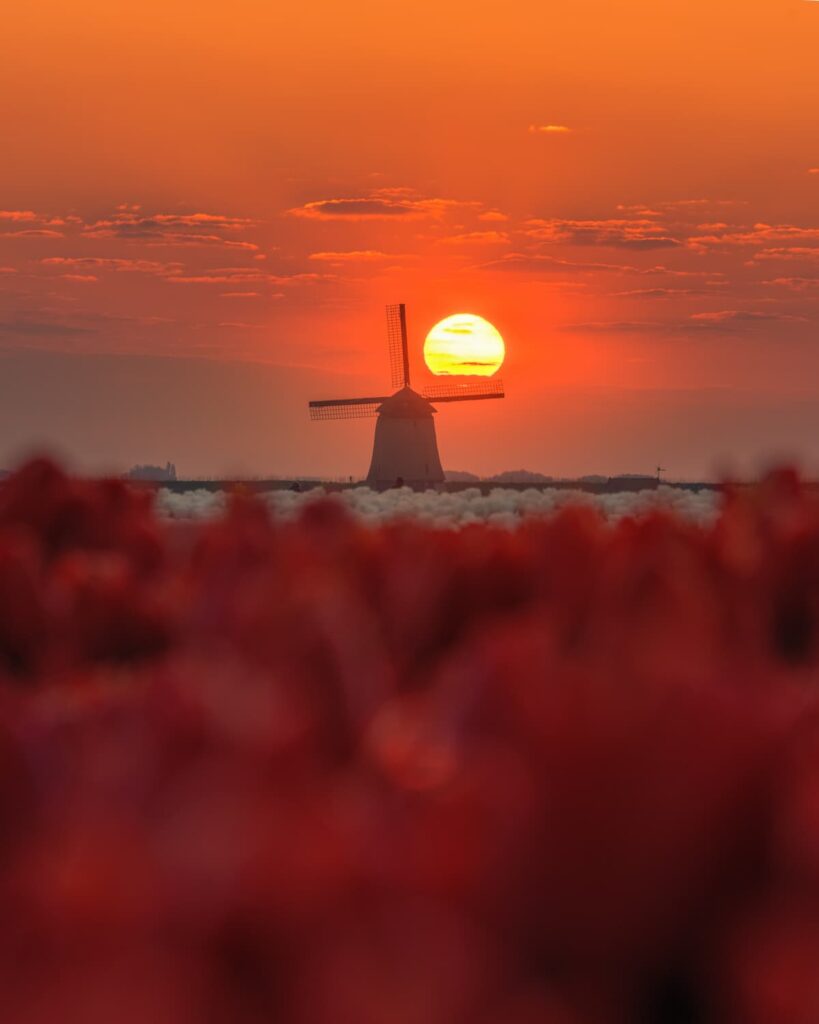
The best time to visit is spring, from mid-April to early May, when the flowers are in full bloom and the light is soft and golden. Locations like Lisse, Noordoostpolder, the fields near Alkmaar, and Schagen offer iconic landscapes, often dotted with windmills or small farmhouses that add depth and context.
The combination of color, structure, and atmosphere is what drew me to these tulip fields and open landscapes. The tulip fields in particular offer a breathtaking graphic quality: strong lines, vivid colors, and a sense of depth that’s unique to the Dutch countryside.
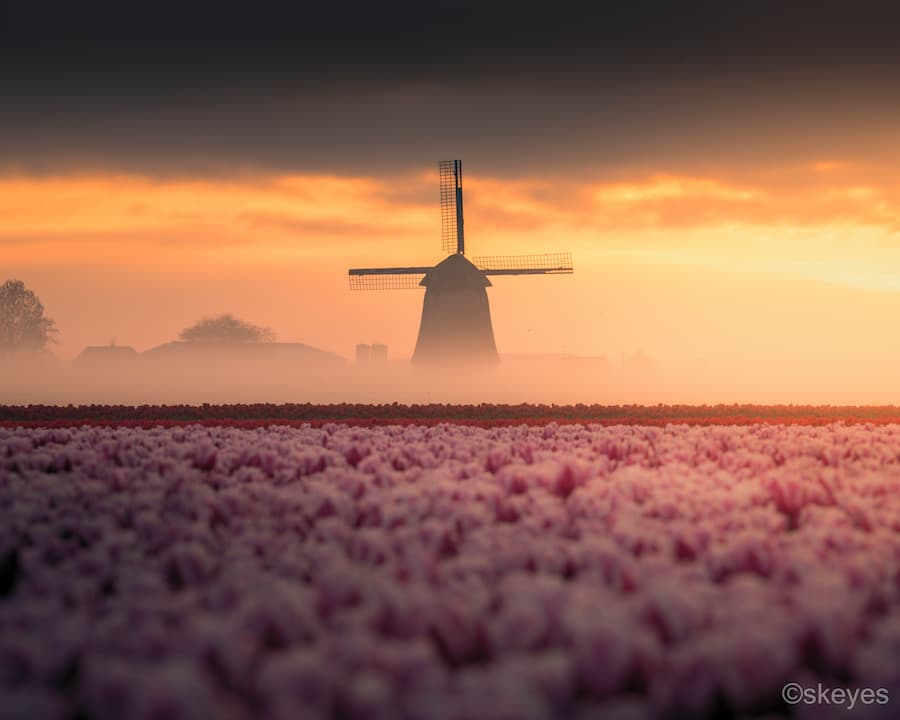
Elements like windmills, fog, and early morning light bring an iconic, almost timeless feel to the scenes. I’m especially inspired by how these elements interact naturally.
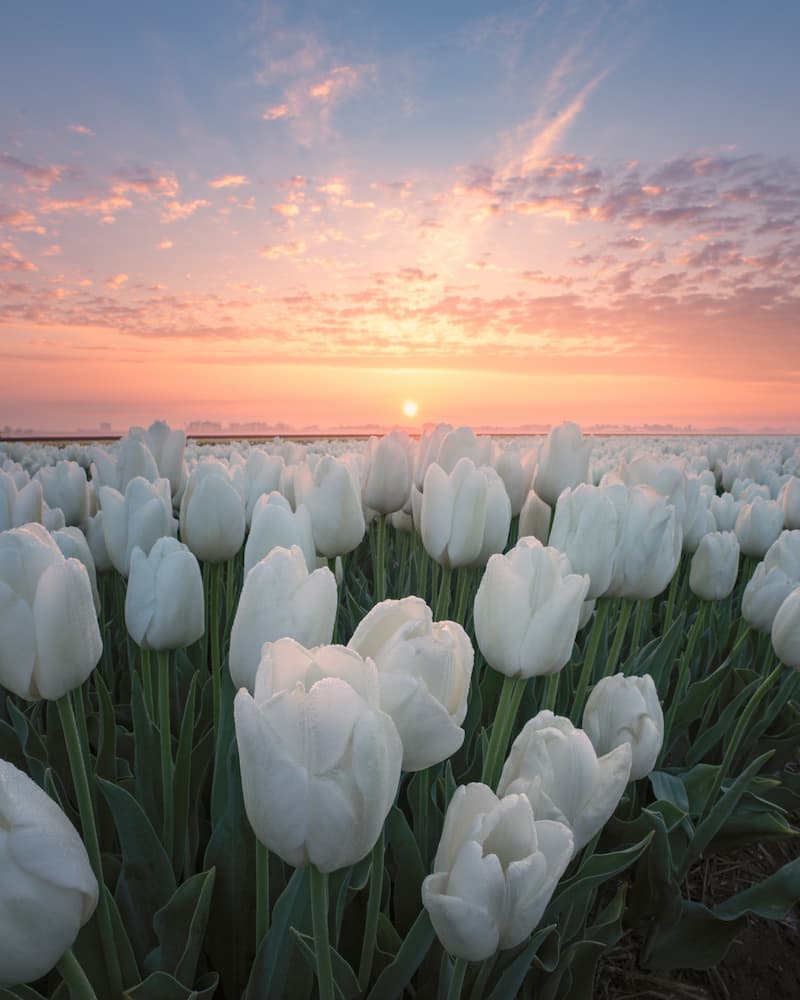
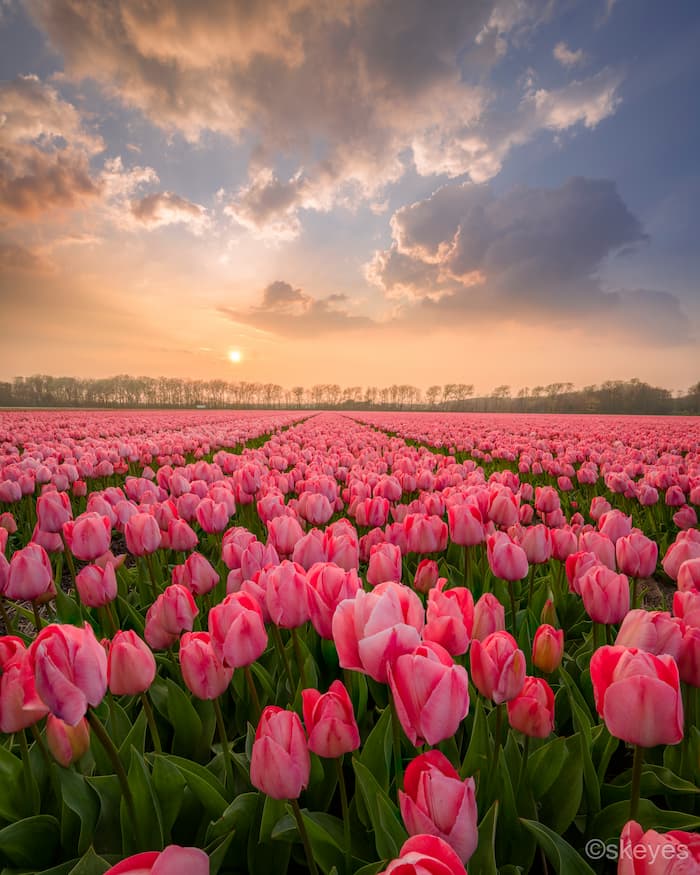
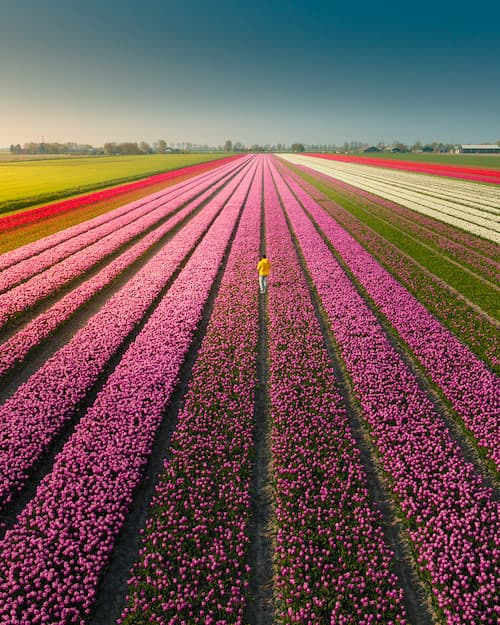
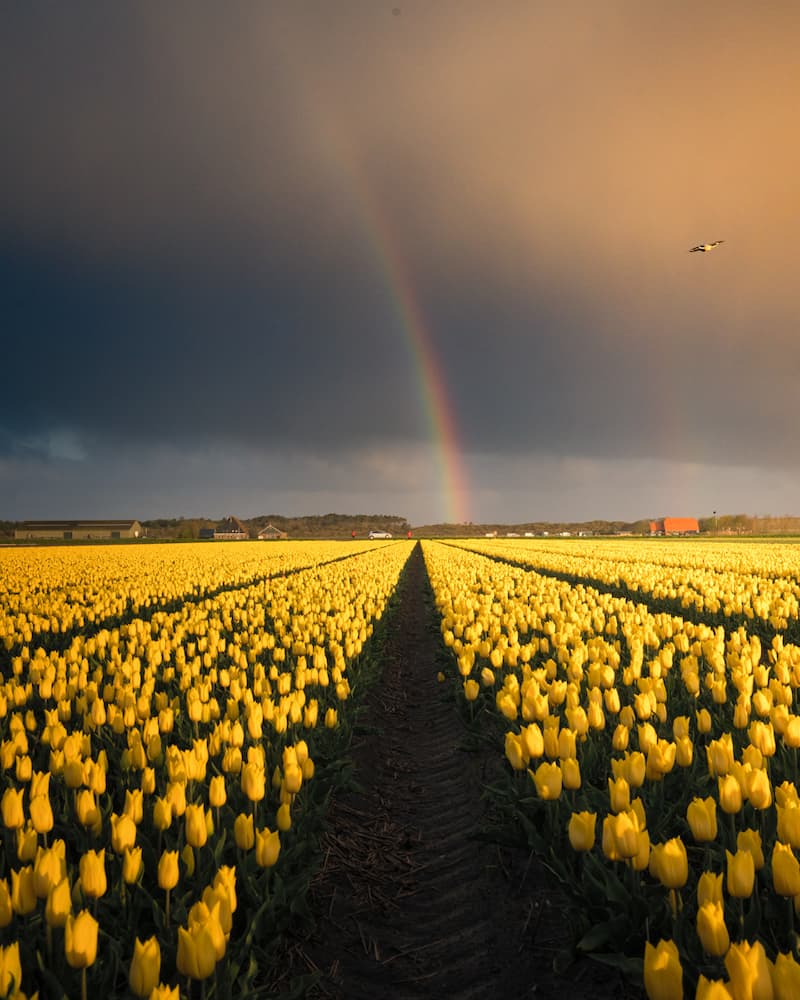
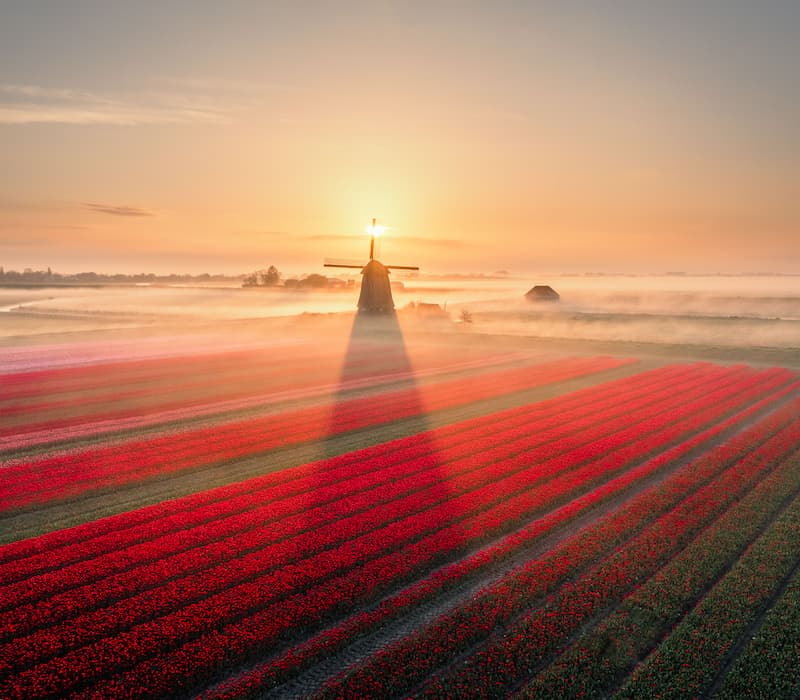
I pay close attention to the placement of the tulips and how they guide the viewer’s eye. I often use the rule of thirds and look for leading lines, like rows of tulips, that draw you into the image, often toward a focal point like a windmill.
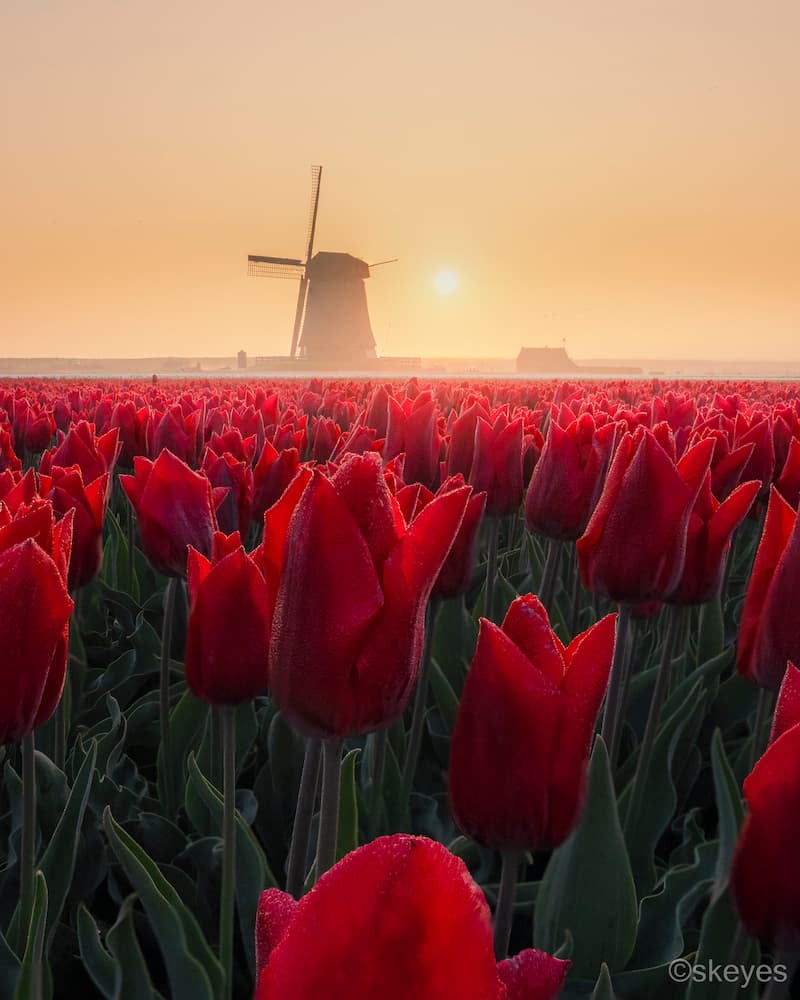
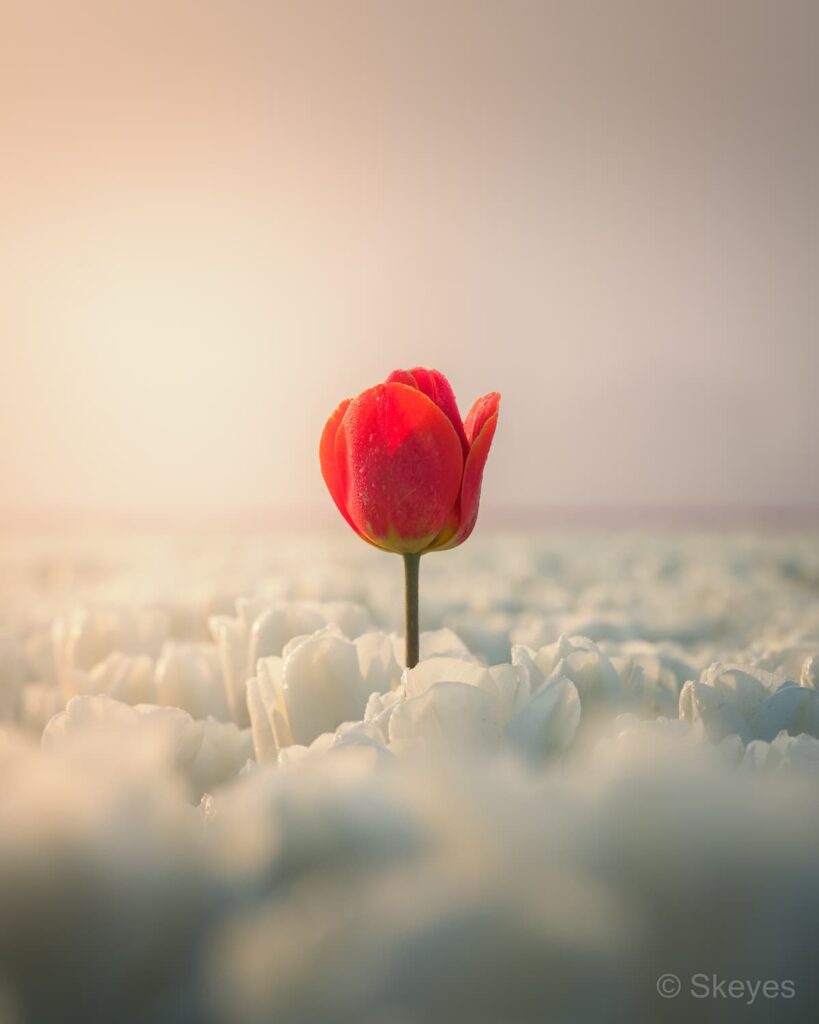
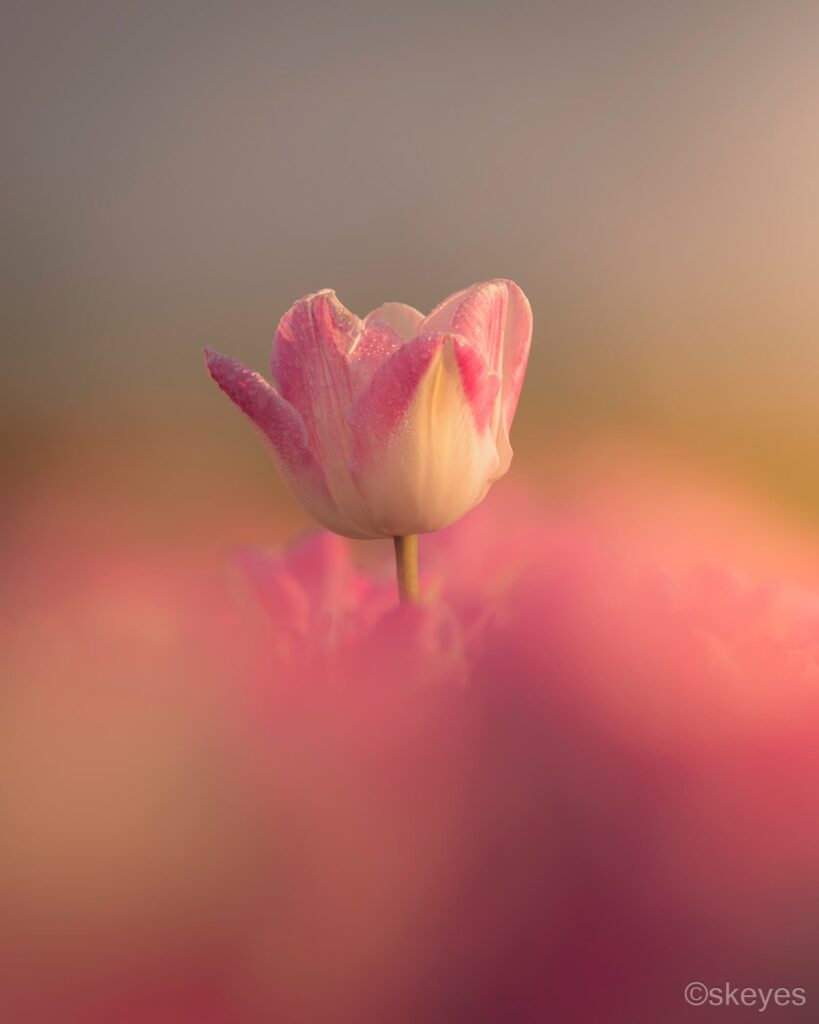
Sometimes I shoot low to the ground with a wide lens to exaggerate perspective and show the tulips stretching into the horizon. Other times, I isolate a single flower or play with shallow depth of field to highlight texture and color up close.


So, depending on what I want to shoot, I select my lenses. I have the Sony A7R V, which gives me incredible resolution and dynamic range, perfect for capturing both wide landscapes and fine details in the same frame. My go-to lens is the 16–35mm, which is essential for those expansive, wide-angle shots that showcase the scale of the tulip fields. It lets me get very close to my subject and emphasize the leading lines and patterns that naturally occur in the fields. For more intimate or isolated compositions, I use a 70–200mm zoom lens to pick out details or compress the scene like isolating a single tulip.
I don’t use filters on my lenses; I prefer to shoot in RAW and do all adjustments in post-processing. This gives me full control over color balance, contrast, and exposure without compromising image quality. My focus is on capturing clean, well-exposed photos in-camera and refining the aesthetic in editing to bring out the mood and colors I envisioned during the shoot.
A drone is also an important tool in my photography. It allows me to capture a unique sense of scale that’s not possible from the ground. Especially in the tulip fields, I love using the drone to highlight the strong leading lines and patterns that emerge from above, adding depth and structure to the vibrant landscapes.


I almost always shoot during sunrise or sunset; those golden hours offer the most magical light. The low sun adds depth, texture, and warmth to the tulips, and when there’s fog or mist, it adds a soft, dreamy layer that elevates the whole scene.
I’m drawn to moody photos with warm light and tones that evoke calm, wonder, or even nostalgia. During golden hour, the natural light already has a soft orange glow, and I build on that using warm color profiles and subtle grading to deepen those hues without oversaturating.
That warm atmosphere helps make the viewer feel present in the scene, almost like they can feel the early morning air or smell the flowers. I often desaturate cooler tones just slightly, so the warm light stands out more—drawing attention to key elements like the rows of tulips or a misty horizon.

In the end, color is a storytelling tool. It’s not just about showing what I saw or making it look nice, but color should enhance the feeling I had when I captured the scene —and hopefully, help others feel it too. Color grading is key to how I bring emotion into my images.


When working with colorful subjects like tulips, it is important to maintain balance. My main goal is to enhance their natural vibrancy and not exaggerate it. To do so, I always start with a well-exposed RAW file and aim to preserve the natural tones of the flowers. In post-processing, I focus on fine-tuning contrast, white balance, and warmth (especially in the light) to keep that authentic glow, without pushing saturation too far.
Oversaturation is one of the biggest pitfalls – especially in reds and magentas, which can easily clip or look artificial. I try to avoid this and always critically look at my images to evaluate the color. I also avoid strong color shifts that don’t reflect the mood or reality of the moment.
To maintain balance and work each color accurately, I often adjust them individually, boosting some and muting others. I also make sure sky tones still feel believable if they’re in the frame. It’s all about respecting the scene while subtly guiding the viewer’s eye with light and tone.


One key technique that helps define my signature look is applying a custom color profile on top of my edits in Lightroom. I first do all the basic adjustments: exposure, contrast, white balance, and HSL, etc., keeping the image clean and natural. Once I’m happy with the base, I apply a color profile that I’ve created or fine-tuned.
These profiles help me bring in that warmth I love, especially during golden hour. They often add a subtle orange glow, slightly lift the shadows, and gently mute cooler tones, which brings more focus to the warmth and depth in the scene without overpowering it.
It’s a simple step, but it gives my photos a consistent and polished feel, tying them together. The key is to apply the profile softly and adjust the intensity so it enhances the natural colors of the tulips and landscape, not overwhelms.

Many photographers are getting into the craft every day. Everyone starts from the beginning, with a beautiful learning journey ahead. It is exciting to be able to share knowledge and experience with these people to help lift them and support their growth.
1) One key piece of advice I would give other creators to develop their unique color grading style for landscape or nature photography would be to keep it simple and natural.
When you’re just starting to develop your color grading style, it’s easy to get caught up in dramatic presets or heavy edits, but the real magic is in learning how to enhance, not overpower, what’s already in your image.
2) Focus on understanding light and color balance first, how warm or cool tones affect mood, and how contrast and saturation guide the eye.
3) Start by making small, intentional adjustments and build from there.
4) Study your favorite photos and ask yourself why they feel a certain way, then try to recreate that feeling, not just the look.

Aside from shooting in the Netherlands, I love photographing on my trips abroad, especially now that I fly long-haul flights as an airline pilot. It has become a huge part of how I experience new places. One of the most impressive sights I’ve captured is Greenland from 12km up in the air. Seeing that vast, icy landscape from above feels completely otherworldly.
That said, I don’t have one specific favorite place. Each country has its unique charm, whether it’s the colors, the light, the people, or the mood. I always try to find something that speaks to me visually, no matter where I am. It’s that variety and surprise that keep travel photography so exciting.
Whether flying above the clouds or walking among tulips at sunrise, photography allows me to see the world with fresh eyes. It’s a privilege to share that view.

Join us in the Azores for a unique photo tour, where you’ll elevate your creative skills with expert guidance from Ronald Soethje, Bruno Ázera, and Nomadict.

In this article, Forest shares how years of chasing scale, silence, and raw landscapes shaped his approach to photography, from the deserts of Kazakhstan to the volcanic ridges of Iceland. He talks about how he uses light, texture, and vast negative space to create images that feel both intimate and overwhelming.

Simon shares the journey behind his photography, from early inspirations to field techniques, editing, and the story of the winning shot that shaped his path.

In this article, Miro shares how his love for cinematic music evolved into a deep passion for photography and how he uses light, color, and atmosphere to turn the streets of Prague into living film scenes.

In this article, Stefanie reveals how her background in physics sparked her passion for astrophotography and how she blends science with creativity to capture the beauty of the night sky. Readers will discover her approach to color, contrast, and editing, as well as her aurora photography workflow.

Spanish photographer Yhabril captures the profound connection between humans and the mountains that shaped him. Growing up in the Pyrenees, his work bridges outdoor sports, landscapes, and celestial scenes — often blending athletes, moonlight, and wilderness into striking visual stories.

In this article, Ariane shares how photography helped her navigate personal challenges, connect authentically with people and animals, and develop a philosophy rooted in empathy and artistic freedom. Readers will also discover her ethical approach to wildlife photography and her trusted equipment for both camouflage techniques and cameras.

Discover how to photograph Dutch tulip fields in their most magical light. From choosing the right gear and lenses to mastering composition, color, and aerial perspectives, this guide shares creative techniques to capture the beauty of the Netherlands’ tulips. Learn how light, color grading, and proportion bring emotion into every frame.