Photo tour in Azores, Portugal
Join us in the Azores for a unique photo tour, where you’ll elevate your creative skills with expert guidance from Ronald Soethje, Bruno Ázera, and Nomadict.
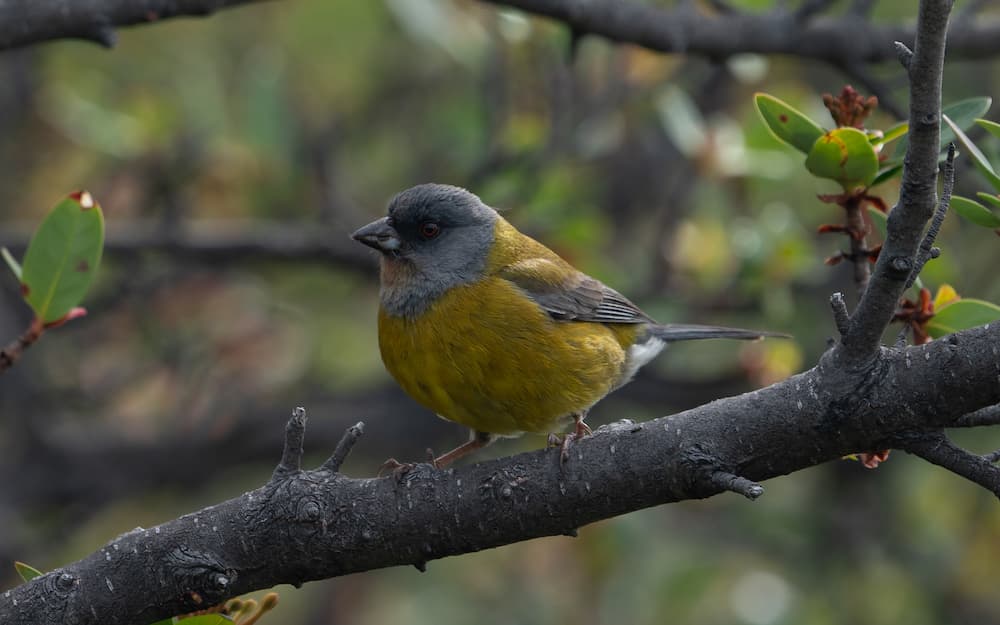
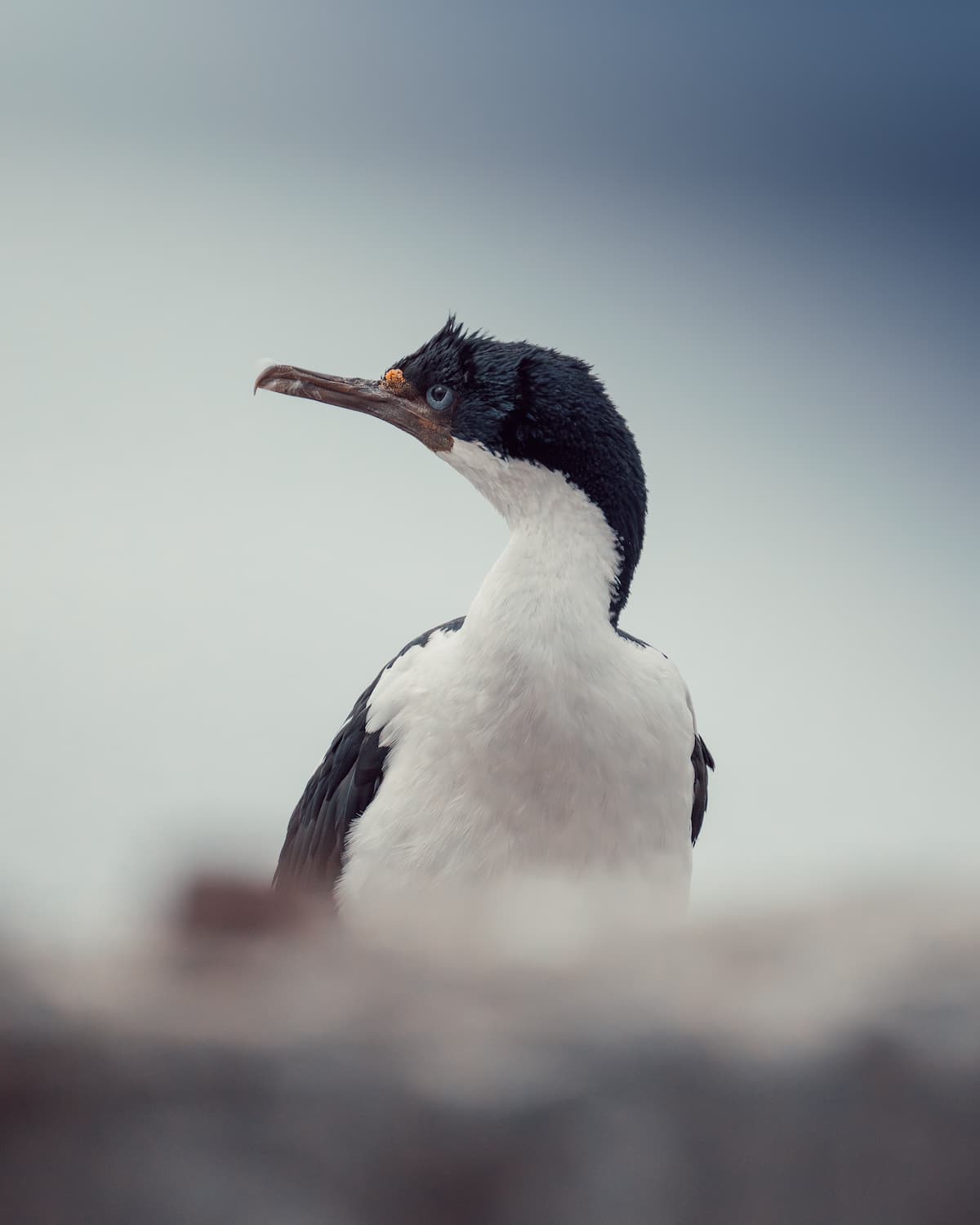
Elias discovered his passion for photography during a transformative trip to Patagonia in 2020. The breathtaking landscapes and encounters with wildlife inspired him to turn those moments into art. His favorite photo, a bird on the W-route in Torres del Paine National Park, symbolizes the magical blend of perfect conditions – directional light, a picturesque background, and harmonious colors.
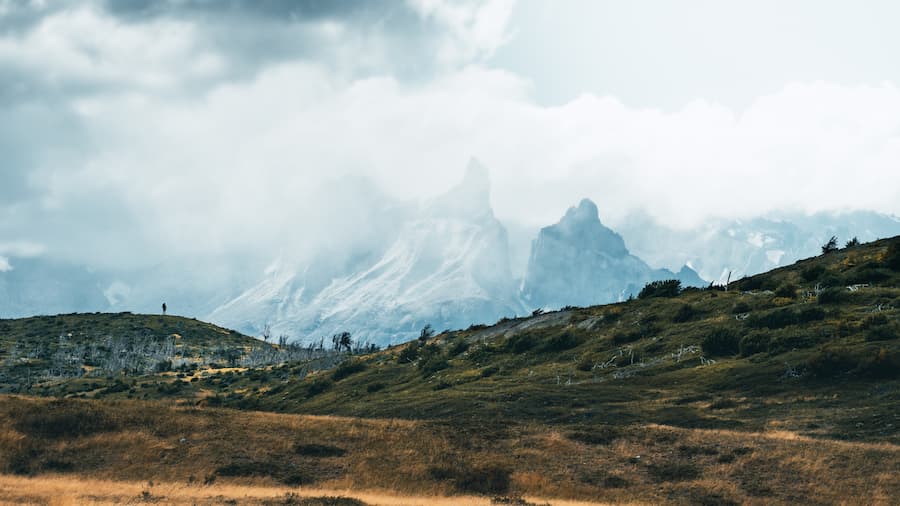
My passion for photography ignited in early 2020 during my first journey to Patagonia. I discovered the breathtaking beauty of nature in that part of South America – from awe-inspiring birds and my first encounter with a fox to landscapes reminiscent of scenes from “The Lord of the Rings.” Captivated by these moments, I realized I wanted to transform them into art. Upon returning home, I made the best decision of my life by acquiring my first camera and immersing myself in the learning process.
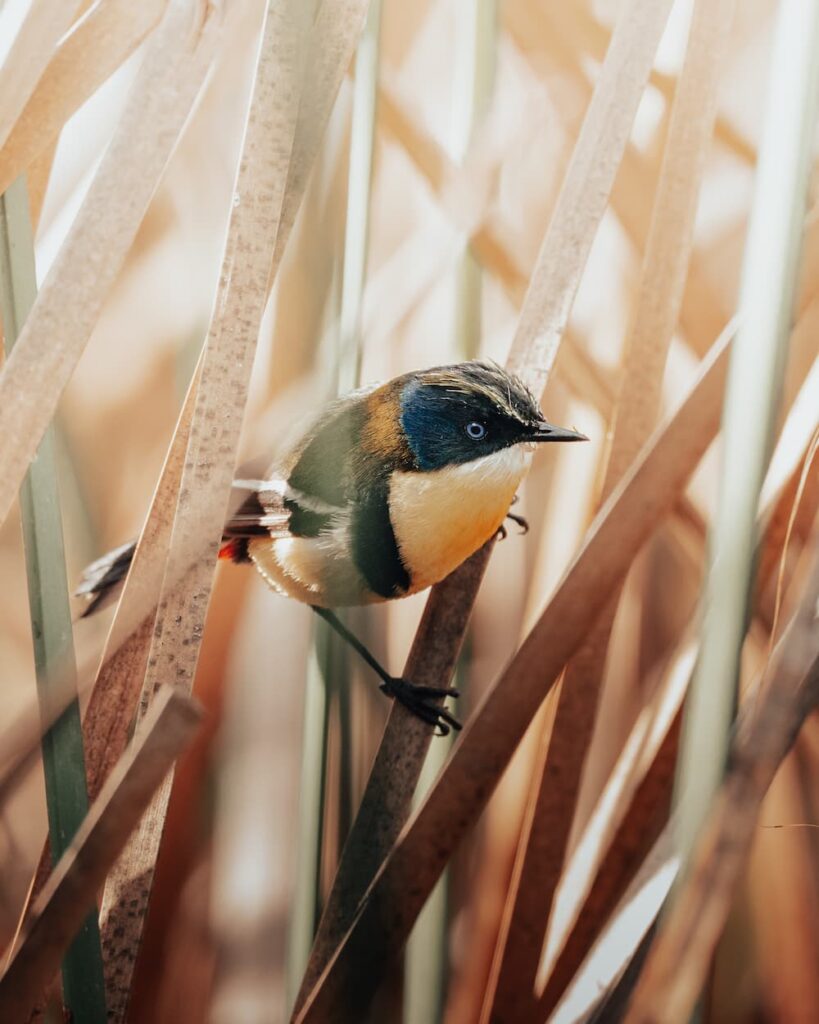
I went back to Patagonia, with a camera, and in the meantime, I have captured some of my favorite photos in this region. One I particularly love is a photo of a bird.
This photo holds a special significance for me. On the day I was trekking the W route in Torres del Paine National Park, I had been hoping for this bird to appear in the vicinity of Nordenskjöld Lake. Then, I heard its call and immediately sought a spot with good lighting and a picturesque background. I patiently waited for a considerable amount of time until the bird finally perched on that tree. It turned out to be a perfect moment for me—there was directional light, and no sky in view, allowing me to easily balance my exposure, and the colors harmonized with the mood I aimed to capture. Of course, such ideal conditions occur only about 10% of the time, but when they do, it feels truly magical.
Birds are a subject I adore photographing, as you can guess when looking at my Instagram feed. There are some vital steps to consider to capture similar images, and first and foremost, it is the environment. I can capture a common, ordinary bird, and if it is surrounded by beautiful colors and natural elements like a forest, the ocean, or the sky, you can get stunning results.
Furthermore, I don’t use the most common camera settings. I like my photos to be very clean so I use a low ISO (usually I don’t go past 1.000) and a slow shutter to get more light. A tripod is fundamental to achieving the best results.
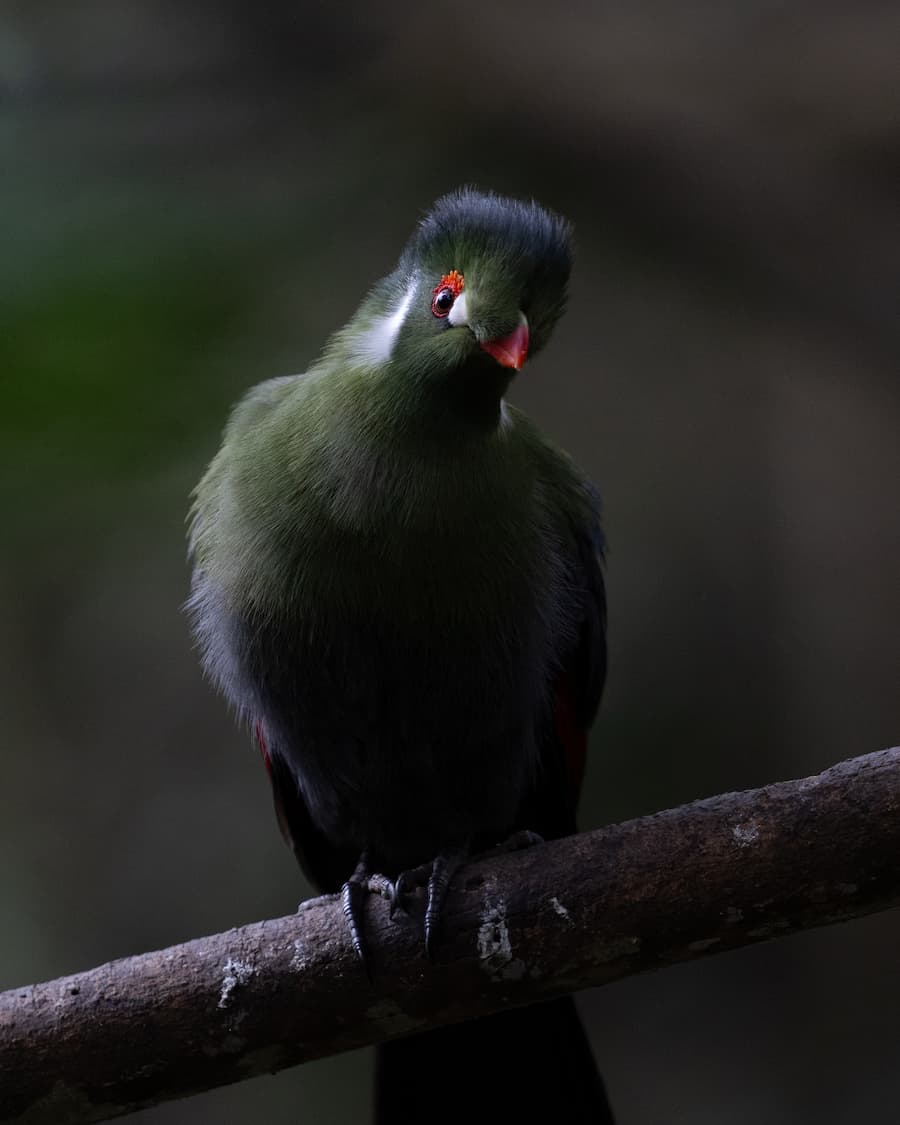
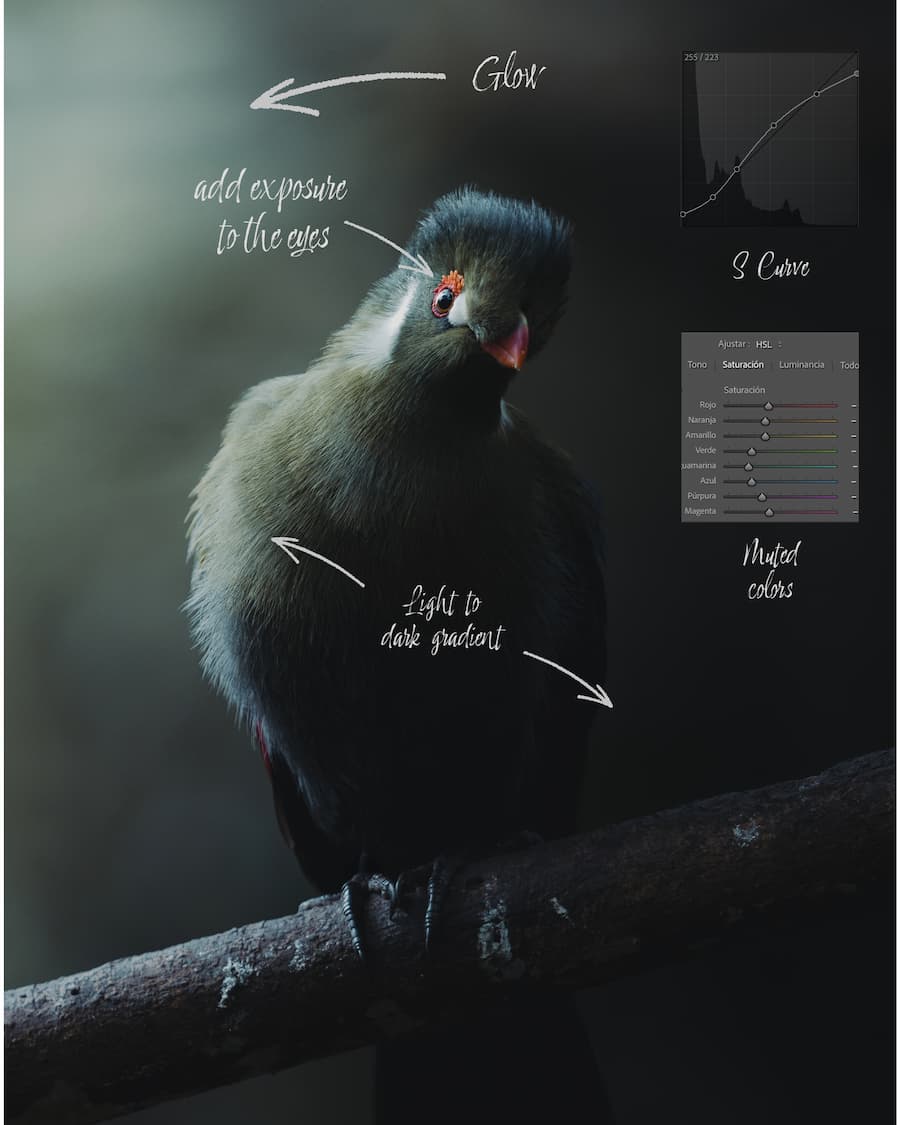
In essence, my editing aims to evoke a familiar and comforting atmosphere, like a cherished memory. The influence of cinematography greatly shapes my current editing style. I consistently adhere to the idea that “the light has to be motivated,” incorporating a subtle glow to convey the direction of light. To reach my present skill level, I devoted significant practice to studying movie stills. My goal was to replicate the colors, moods, and emotions evoked by those cinematic frames.
Characterized by a slightly dark and muted tone, especially in the greens, my style involves desaturating the green hues while enhancing other colors through saturation adjustments and meticulous curve manipulation. Implementing an S curve, particularly across various channels, can significantly heighten color contrast. This serves as a solid foundation for my editing, allowing me to develop the distinctive style I prefer. Starting with a base edit that resonates with me, I then delve into experimentation with masks to refine specific areas—darkening some, illuminating others, brightening eyes, enhancing feather details, and more.
The above describes the approach I have today, but as with everyone and anything else, evolution is a continuous process that never stops.
Other than strictly adhering to a style that works or is appreciated by your audience, it is best to follow your preferences and create what you love. When you’re not happy doing something, it’s reflected in the final product – love what you do!
That has been one important lesson I’ve learned in recent years and can be applied to anything in life. I am 36 at the moment of writing this, and it took me 33 years to discover my love for photography. Since then, I have been happier than ever – it is never too late to start doing what you love.
Sharing your work is another practice I’ve realized is pivotal. You never know how your Art can inspire people, because it truly happens in unimaginable ways.
Finally, always jumping on new opportunities despite fears or doubts brings you to the next level, both professionally and personally. You always learn something new from every experience. For example, this year I had the chance to shoot a mini-documentary in Patagonia for a clothing brand that focuses on nature. I had a very short time to capture as much as I could. It was a very challenging but beautiful experience. I learned to be a one-man orchestra, taking photos, shooting videos, editing, driving, planning, etc. Now I have the experience and knowledge to conduct a project that size.

Join us in the Azores for a unique photo tour, where you’ll elevate your creative skills with expert guidance from Ronald Soethje, Bruno Ázera, and Nomadict.

In this article, Forest shares how years of chasing scale, silence, and raw landscapes shaped his approach to photography, from the deserts of Kazakhstan to the volcanic ridges of Iceland. He talks about how he uses light, texture, and vast negative space to create images that feel both intimate and overwhelming.

Simon shares the journey behind his photography, from early inspirations to field techniques, editing, and the story of the winning shot that shaped his path.

In this article, Miro shares how his love for cinematic music evolved into a deep passion for photography and how he uses light, color, and atmosphere to turn the streets of Prague into living film scenes.

In this article, Stefanie reveals how her background in physics sparked her passion for astrophotography and how she blends science with creativity to capture the beauty of the night sky. Readers will discover her approach to color, contrast, and editing, as well as her aurora photography workflow.

Spanish photographer Yhabril captures the profound connection between humans and the mountains that shaped him. Growing up in the Pyrenees, his work bridges outdoor sports, landscapes, and celestial scenes — often blending athletes, moonlight, and wilderness into striking visual stories.

In this article, Ariane shares how photography helped her navigate personal challenges, connect authentically with people and animals, and develop a philosophy rooted in empathy and artistic freedom. Readers will also discover her ethical approach to wildlife photography and her trusted equipment for both camouflage techniques and cameras.

Discover how to photograph Dutch tulip fields in their most magical light. From choosing the right gear and lenses to mastering composition, color, and aerial perspectives, this guide shares creative techniques to capture the beauty of the Netherlands’ tulips. Learn how light, color grading, and proportion bring emotion into every frame.