Photo tour in Azores, Portugal
Join us in the Azores for a unique photo tour, where you’ll elevate your creative skills with expert guidance from Ronald Soethje, Bruno Ázera, and Nomadict.
Ben Yavar is an award-winning freediving instructor and underwater photographer whose work captures the breathtaking beauty of marine life. In this article, he shares insights into the delicate balance between freediving and photography, offering a glimpse into his techniques, philosophy, and the profound connection he feels with the underwater world.
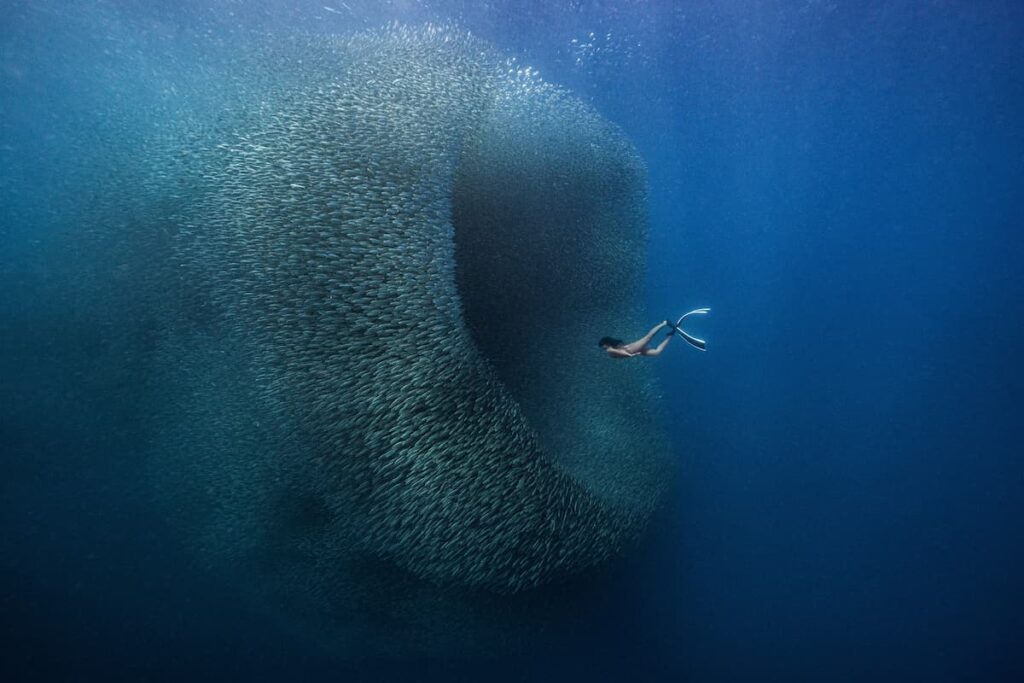
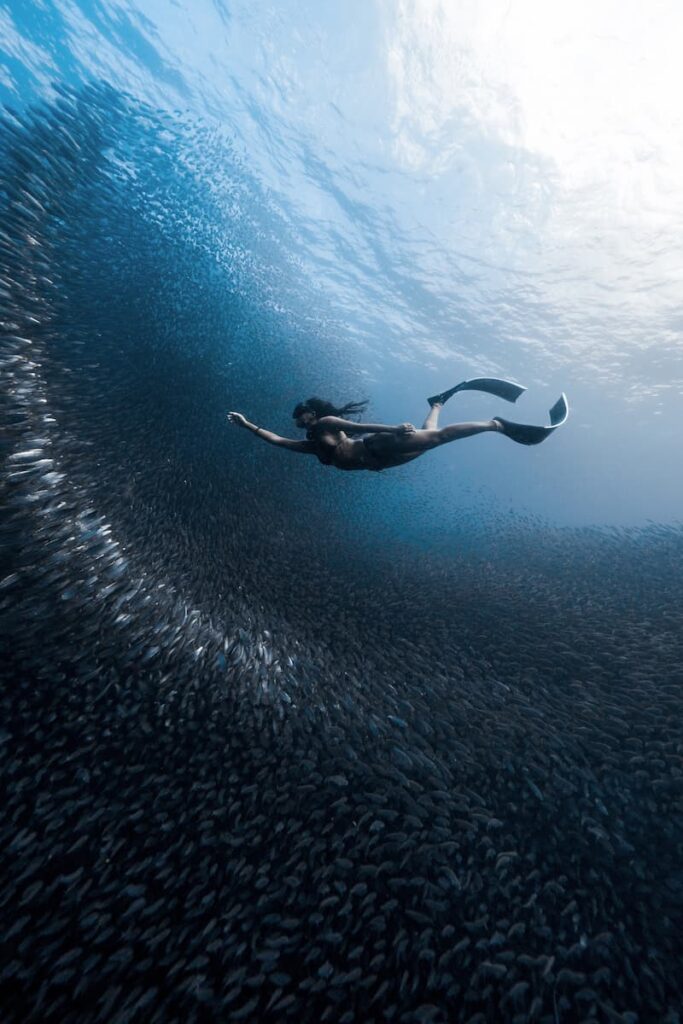
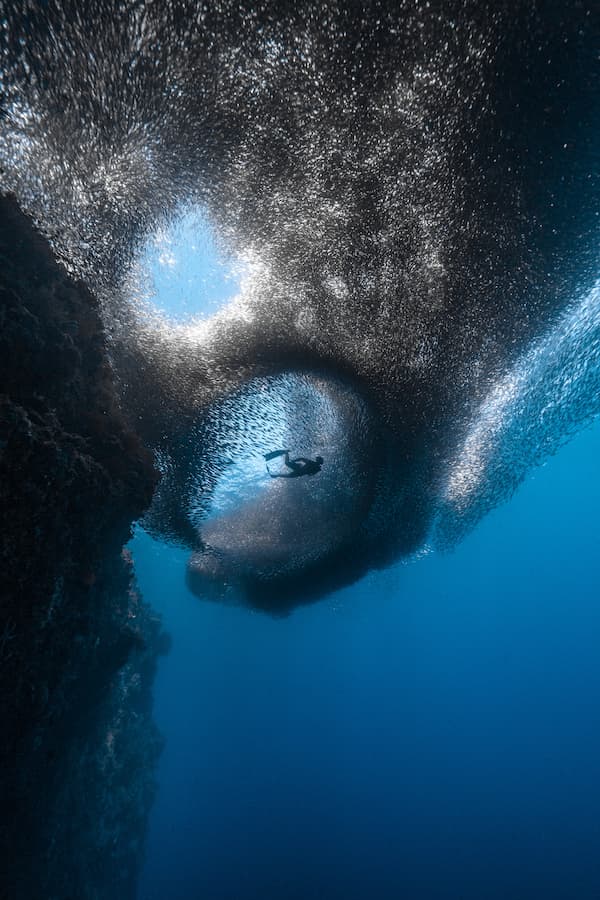
After a few hours of traveling, we arrived at the dive site, ready to explore. Diving from the shore, we were greeted by a stunning sardine run and incredible visibility in the ocean—a dream scenario for any underwater photographer.
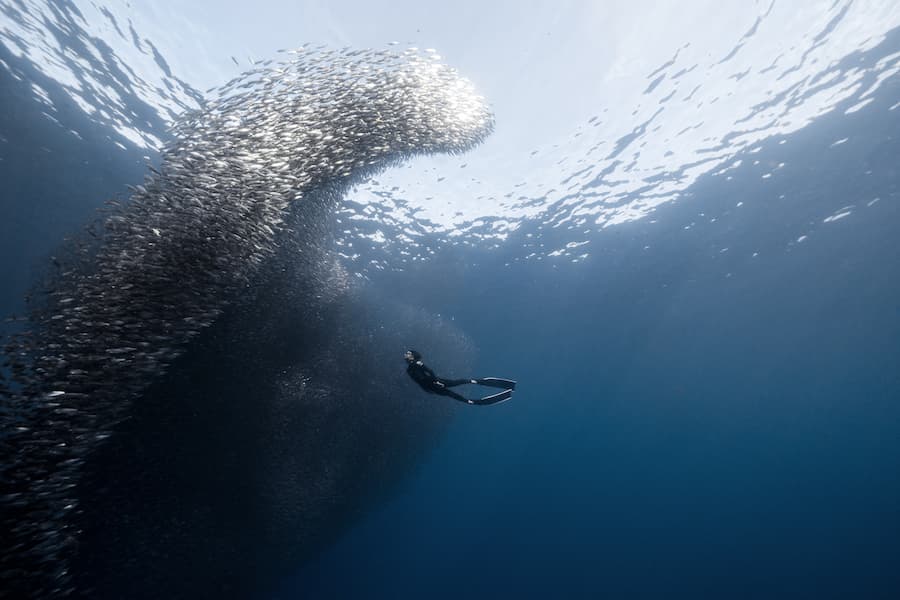
We ventured a bit more into the open ocean to push our luck even further. We found ourselves in the middle of a massive sardine run, completely undisturbed and just for us to capture. The energy of the scene was breathtaking.
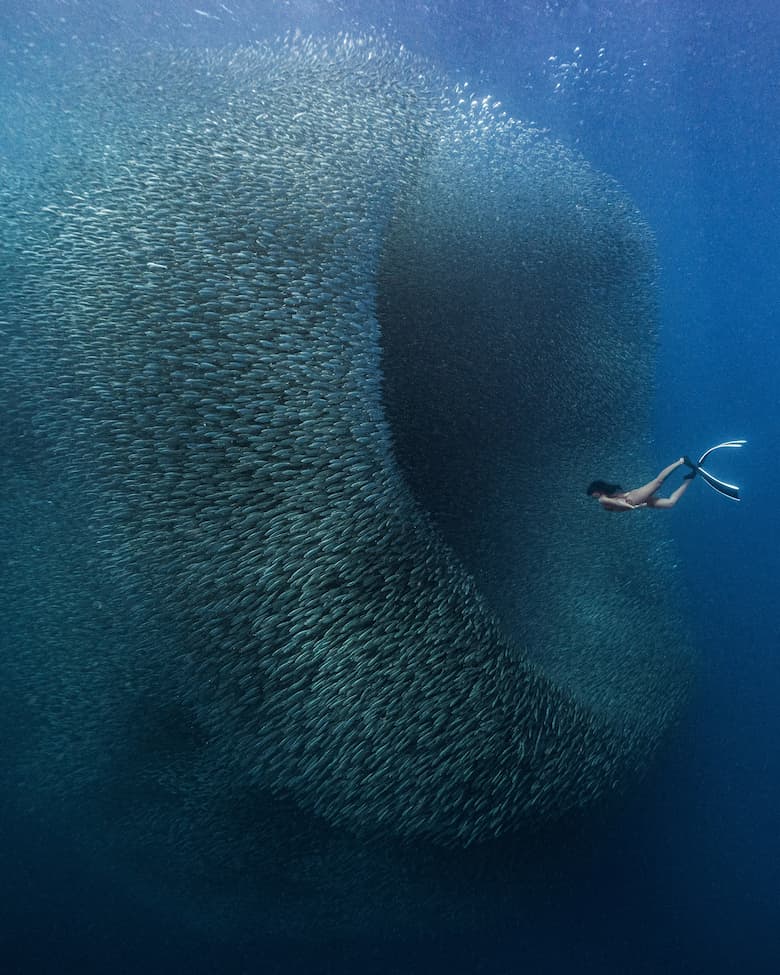
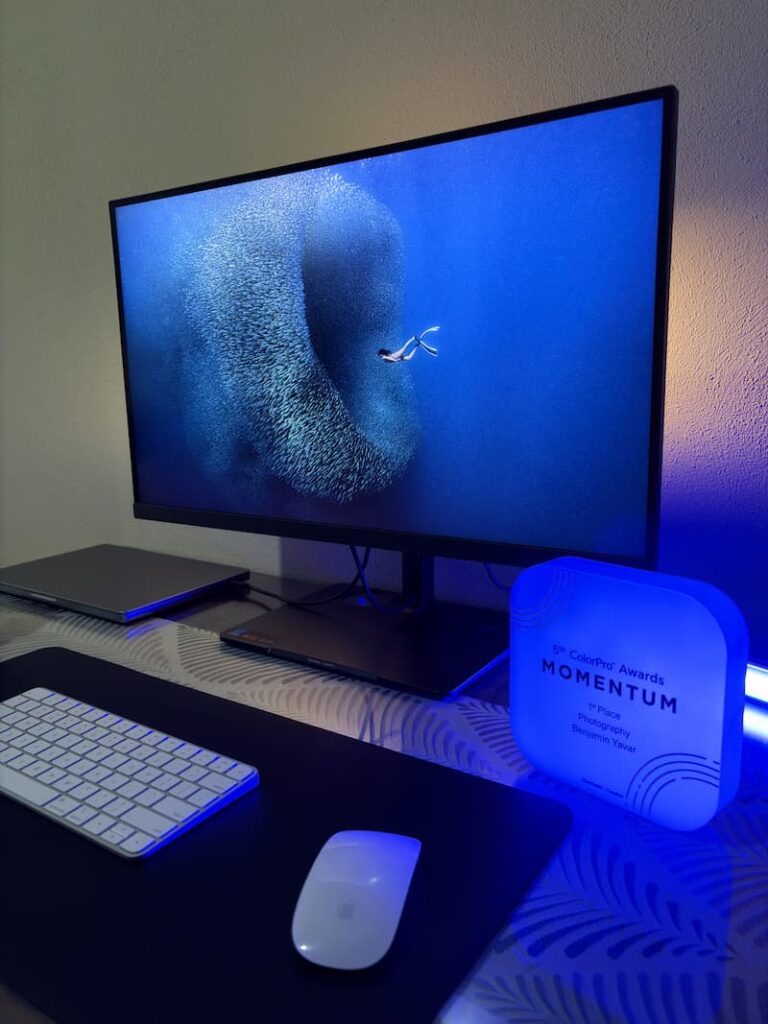
I knew this was a moment worth preserving. Everything came together perfectly to create an unforgettable experience and an image I’m incredibly proud of; an image that won the ColorPro Awards 2024, with the theme “Momentum”.

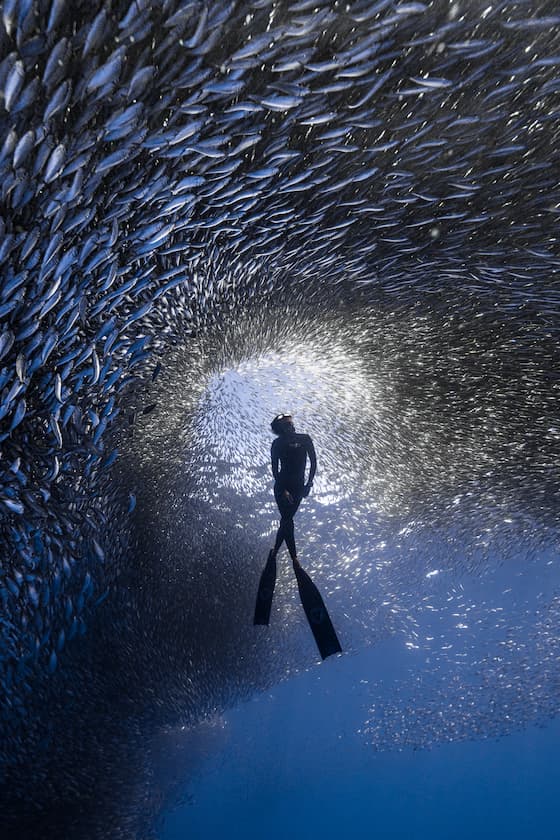
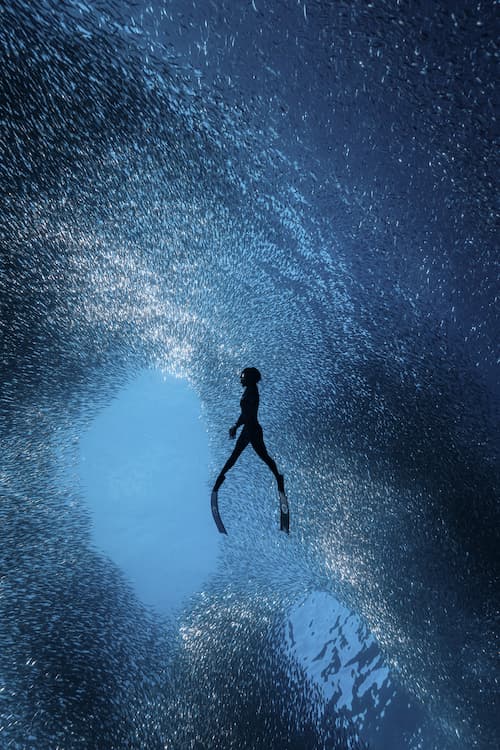
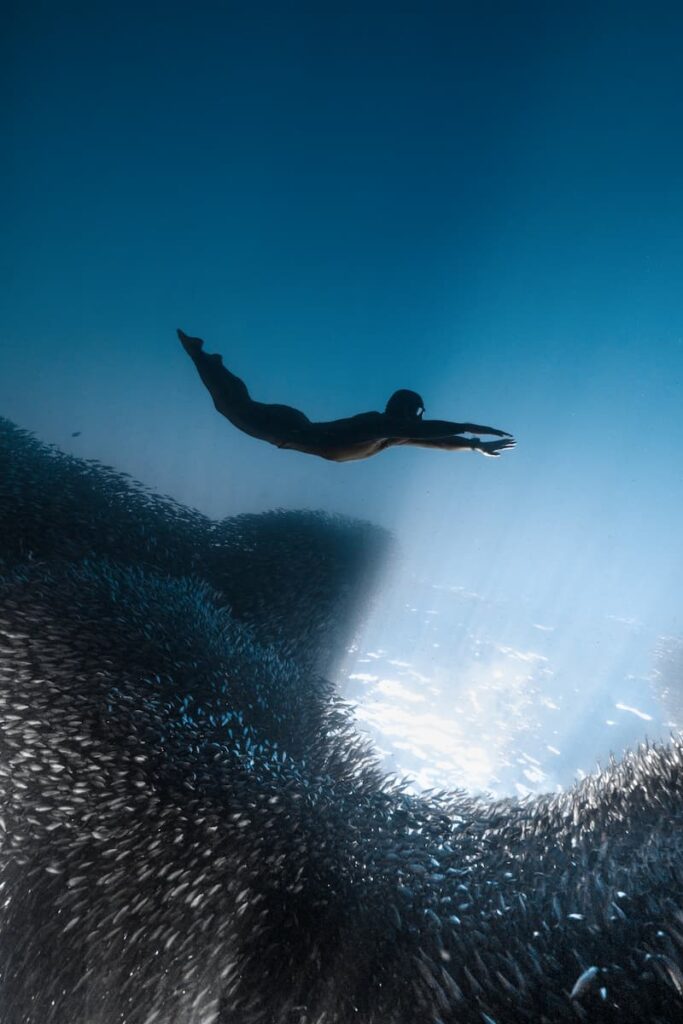
Capturing the dynamic movement of sardines requires a blend of preparation, adaptability, and instinct. The first step is to observe their behavior – sardines move in synchronized patterns that can be mesmerizing but also unpredictable. By trying to understand their flow, I can anticipate potential formations and position myself accordingly.
I rely heavily on my freediving skills to move silently and blend into the environment, minimizing disturbances. This allows me to get closer to the action without scaring them away. Maintaining a steady position is crucial, as even slight movements can disrupt the scene or cause a blur in the image.


From a technical perspective, I keep my camera settings ready to adapt to changing light and movement. A fast shutter speed is essential to freeze the sardines’ rapid motion, while a smaller aperture, such as f/9, helps maintain sharpness across the frame.
Patience and persistence are key—capturing a shot that conveys the energy and beauty of their collective movement often takes multiple dives.
Balancing freediving and photography in challenging environments requires practice, preparation, and a mindful approach. As a freediving instructor, I’ve developed a strong foundation in breath-hold techniques, which helps me stay calm and focused underwater.
This calmness is essential for both disciplines, allowing me to conserve energy and be fully present in the moment. Holding a continental record in freediving has deepened my understanding of this synergy, as both freediving and photography demand discipline, patience, and continuous commitment to improvement.
When preparing for a shoot, I ensure my gear is set up perfectly before entering the water. Adjusting camera settings on land allows me to focus entirely on freediving and composition underwater. I pre-set parameters like shutter speed, aperture, and ISO based on the lighting conditions and adapt quickly if needed.
Freediving’s emphasis on incremental progress mirrors photography’s iterative nature—each adjustment and dive builds toward achieving a more refined outcome, whether it’s a deeper dive or a more impactful shot.


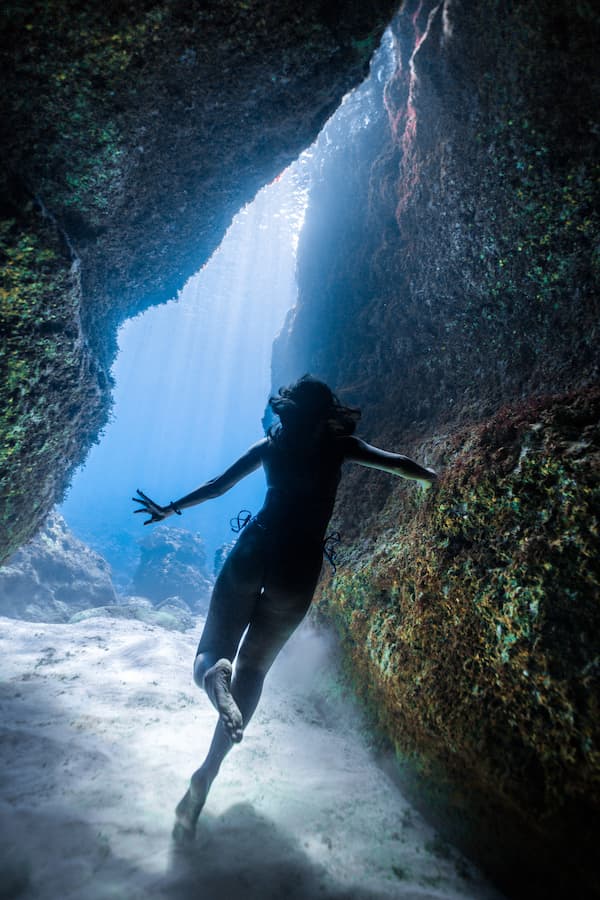
While diving, I prioritize safety and technique above all else. Efficient movement and buoyancy control enable me to position myself without startling marine life or disturbing sediment. At the same time, I’m constantly assessing the scene, looking for opportunities to align light, movement, and subject placement for a compelling shot.
The mindset of consistent growth influences how I approach these moments, always seeking to improve my technique and capture unique, meaningful experiences that reflect my journey.
Ultimately, the key is finding synergy between the two disciplines. Freediving provides the agility and proximity needed to capture wildlife, while photography allows me to share the wonders of the underwater world.
Both require patience and practice, but when balanced well, they create truly magical results. Achieving personal goals, whether in diving deeper or creating more impactful images, inspires me to continue exploring and capturing the beauty of the ocean.
Preparing for underwater shoots like the sardine run involves both mental and physical readiness, each requiring its focus.
Mentally, it’s pure joy and excitement. The ocean is my happy place, and heading out, especially with my girlfriend, Jay, and close friends, brings a sense of camaraderie and adventure. Exploring new locations adds to the thrill, as every dive offers the possibility of witnessing something extraordinary. This positive mindset helps me stay calm and focused during the shoot.
Physically, the demands are significant. A single session can involve more than 50 dives with minimal recovery time, which can be demanding on the legs and require a strong tolerance to CO2. To prepare, I maintain a regular workout routine to build overall fitness and strength. I also focus on specific leg training to reduce lactic acid buildup, ensuring I can handle the physical strain of repetitive dives.
This combination of mental excitement and physical preparedness allows me to make the most of every dive, even in the unpredictable and challenging conditions of the ocean.


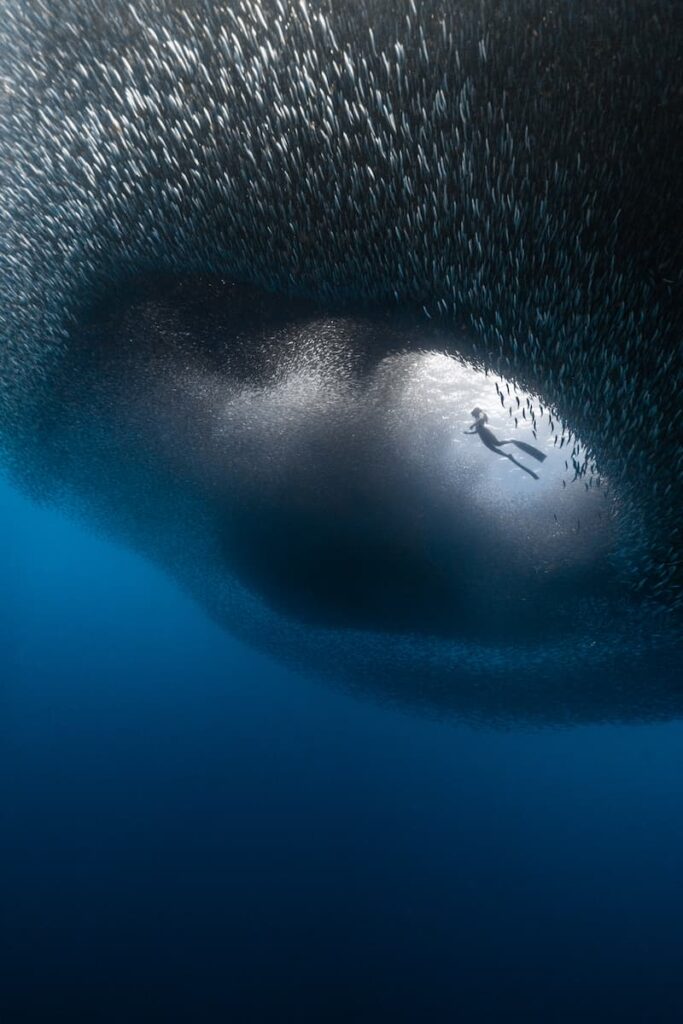
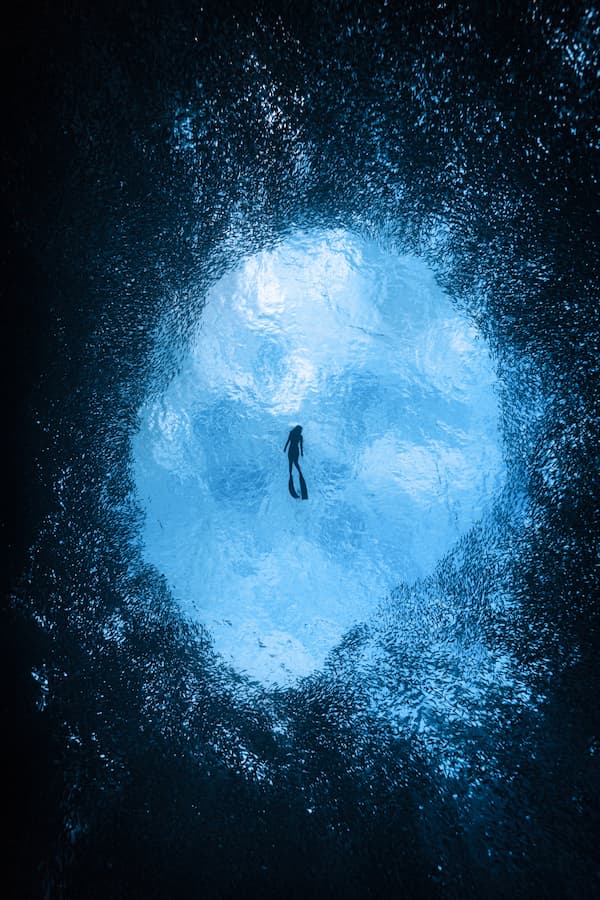
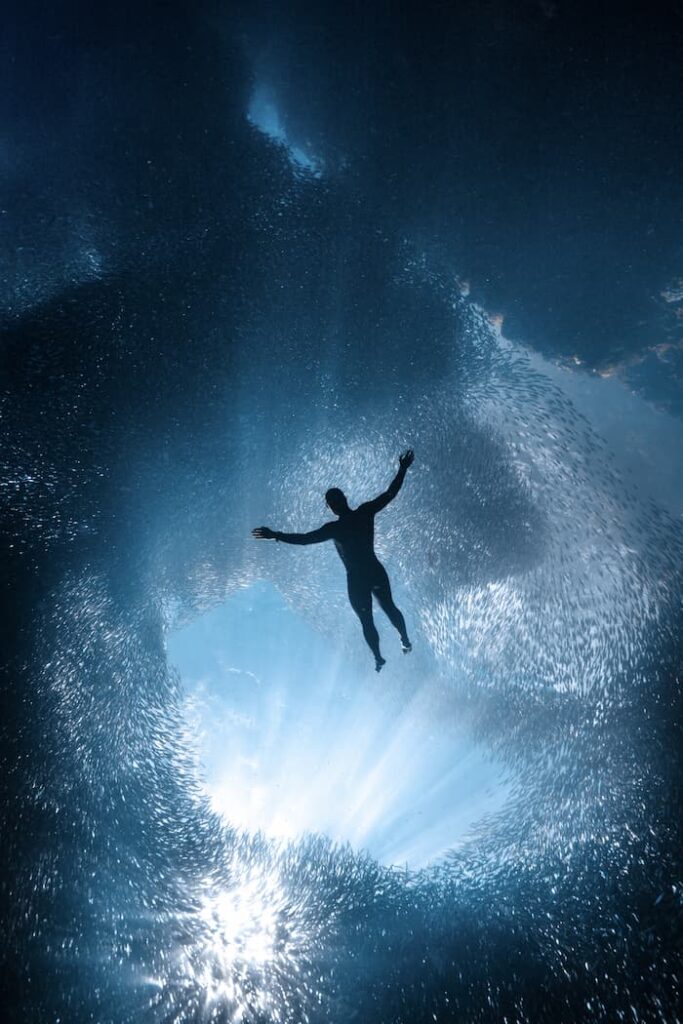
One of the most unforgettable experiences I’ve had while photographing marine life was an extraordinary moment that felt like a true gift from the ocean. We were diving in Moalboal, Philippines, among the sardine run. I was about 10 meters deep, holding my breath for nearly a minute, when Jay, my girlfriend, dived down through the swirling sardines.
As if orchestrated by nature, the sardines formed an incredible vortex around her—an image I captured. Just as I clicked the photo, Jay pointed in a direction, and there it was—a massive whale shark, completely out of the blue!
The whale shark stayed in the area for a few minutes, giving us the chance to capture some truly breathtaking photos. That day remains carved in my memory as a perfect example of the surprises and wonders the ocean holds, making every dive an adventure like no other.

For anyone looking to start underwater photography, especially in dynamic or challenging conditions, my first advice is to take a freediving course—it’s an absolute must. In just three days, you’ll be amazed at how much you can learn, from breath-hold techniques to feeling more at ease beneath the surface.
Comfort underwater is essential – it takes practice and patience to build confidence while holding your breath. A course will teach you not only the basics of freediving but also important safety protocols, which are crucial when spending extended time in the water.
Once you’re comfortable, focus on gradual progress. Start with shallow dives to practice framing shots and adjusting your camera settings, then work your way up to more dynamic scenarios. Developing your skills both as a freediver and a photographer will allow you to approach underwater challenges with greater ease and creativity.


Key points for captivating wildlife photography:
1) Storytelling and emotional connection: A powerful wildlife photograph tells a story and evokes emotions, fostering a sense of connection to the natural world.
2) Inspiration from nature: Encounters with animals highlight their diversity and beauty, emphasizing the intricate balance of life on Earth.
3) Underwater photography’s unique magic: The underwater realm feels like another dimension where humans are temporary visitors. The fleeting nature of these moments adds meaning to every shot.
4) Capturing essence over beauty: Focus on the harmony, movement, and fragility of marine life, aiming to reflect their true essence, not just their visual appeal.
5) Environmental responsibility: Photography serves as a reminder of the need to protect the ocean and its inhabitants for future generations.


I am always looking for ways to evolve and push the boundaries of my work. One key approach I’ve taken is to think more outside the box—away from traditional compositions and familiar perspectives. I spend a lot of time visualizing and processing images in my head, imagining how I can capture moments in a unique way before I even dive in.
When the right opportunity presents itself, I’m ready to click, knowing that I’ve already anticipated how to approach the shot. Moving forward, I aim to refine this creative process even further, staying open to experimenting with new techniques, angles, and lighting conditions to create more impactful and thought-provoking images. It’s all about continuously challenging myself to find fresh ways to represent the natural world and its beauty.
Having won the Nature Photographer of the Year (IPA 2024), and having won the Color Pro Awards (2024) with the Sardines image, or any other award I might receive in the future with another photograph, is part of my evolution as a photographer and is not an end-stage but rather a mark on my journey – my skills and knowledge will continue to develop.

Join us in the Azores for a unique photo tour, where you’ll elevate your creative skills with expert guidance from Ronald Soethje, Bruno Ázera, and Nomadict.

In this article, Forest shares how years of chasing scale, silence, and raw landscapes shaped his approach to photography, from the deserts of Kazakhstan to the volcanic ridges of Iceland. He talks about how he uses light, texture, and vast negative space to create images that feel both intimate and overwhelming.

Simon shares the journey behind his photography, from early inspirations to field techniques, editing, and the story of the winning shot that shaped his path.

In this article, Miro shares how his love for cinematic music evolved into a deep passion for photography and how he uses light, color, and atmosphere to turn the streets of Prague into living film scenes.

In this article, Stefanie reveals how her background in physics sparked her passion for astrophotography and how she blends science with creativity to capture the beauty of the night sky. Readers will discover her approach to color, contrast, and editing, as well as her aurora photography workflow.

Spanish photographer Yhabril captures the profound connection between humans and the mountains that shaped him. Growing up in the Pyrenees, his work bridges outdoor sports, landscapes, and celestial scenes — often blending athletes, moonlight, and wilderness into striking visual stories.

In this article, Ariane shares how photography helped her navigate personal challenges, connect authentically with people and animals, and develop a philosophy rooted in empathy and artistic freedom. Readers will also discover her ethical approach to wildlife photography and her trusted equipment for both camouflage techniques and cameras.

Discover how to photograph Dutch tulip fields in their most magical light. From choosing the right gear and lenses to mastering composition, color, and aerial perspectives, this guide shares creative techniques to capture the beauty of the Netherlands’ tulips. Learn how light, color grading, and proportion bring emotion into every frame.