Photo tour in Azores, Portugal
Join us in the Azores for a unique photo tour, where you’ll elevate your creative skills with expert guidance from Ronald Soethje, Bruno Ázera, and Nomadict.
Arnaud’s journey into photography began in 2023, inspired by a friend’s breathtaking road trip photos. Starting with a basic drone and a desire to capture the beauty around his home, his passion quickly grew, leading him to invest in a camera and fully immerse himself in the craft. Though still early in his journey, Arnaud’s dedication to practice, patience, and embracing mistakes has already shaped his evolving style. One of his images won the Best of the Week at Nomadict.
I discovered photography thanks to a friend who lives on the other side of the world and shares stunning photos from his road trips. Inspired by his work, I wanted to capture the beauty around my own home. I started by buying a basic drone and experimenting with aerial shots, which quickly drew me in. Rather than upgrading to a more advanced drone, I decided to invest in a camera. I spent a lot of time learning, practicing, and editing my photos, and soon found myself completely immersed in the craft. Photography has since become a true passion, consuming most of my free time.
Throughout my time practicing photography, which began when I bought my first camera in November 2023, I’ve learned several valuable lessons that have shaped both my personal and creative journey. Although photography is something I pursue in my free time and not professionally, it has taught me more than I expected in just a few months. The most important lesson I’ve learned is the need for consistent practice. While training is essential, hands-on experience and regular shooting are crucial for improvement and growth. Secondly, photography has taught me the value of patience. I’ve realized that rushing the process leads nowhere, and it’s important to take my time, trust in the gradual learning curve, and remain calm when things don’t happen right away.
The third lesson is not to be afraid of making mistakes or failures. This might sound simple, but it’s been transformative for me. Each mistake I made has been an opportunity to learn. Finally, I’ve learned the importance of handling criticism. When sharing my work, I’ve received both positive and negative feedback. It’s essential to take constructive criticism to heart and use it as fuel for growth and progress.
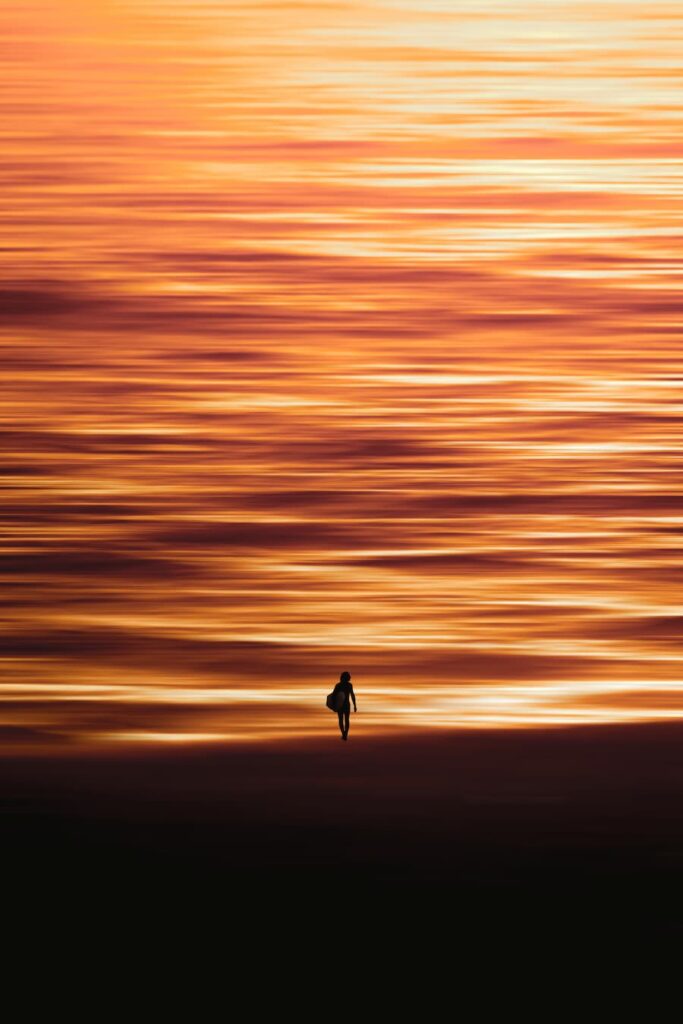
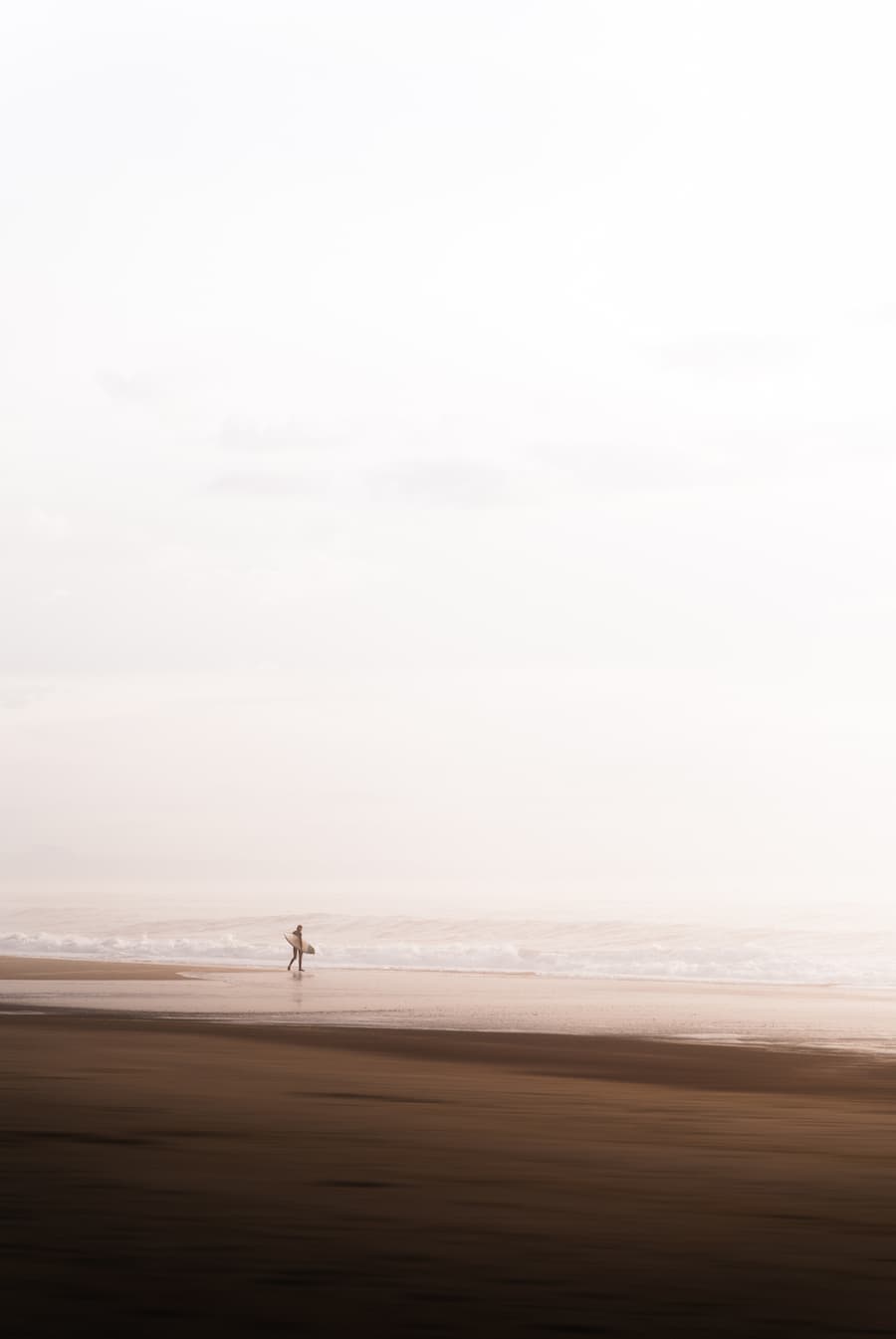
I can say that the photo that won the Best of the Week at Nomadict represents the second lesson for me. Like many evenings after finishing work, I walked and stopped to eat on the beach. I took a few pictures but I was not satisfied, even a little frustrated. I stayed a little longer and at the time of leaving, I turned around one last time. I saw the surfer coming out of the water and I managed to take this picture.

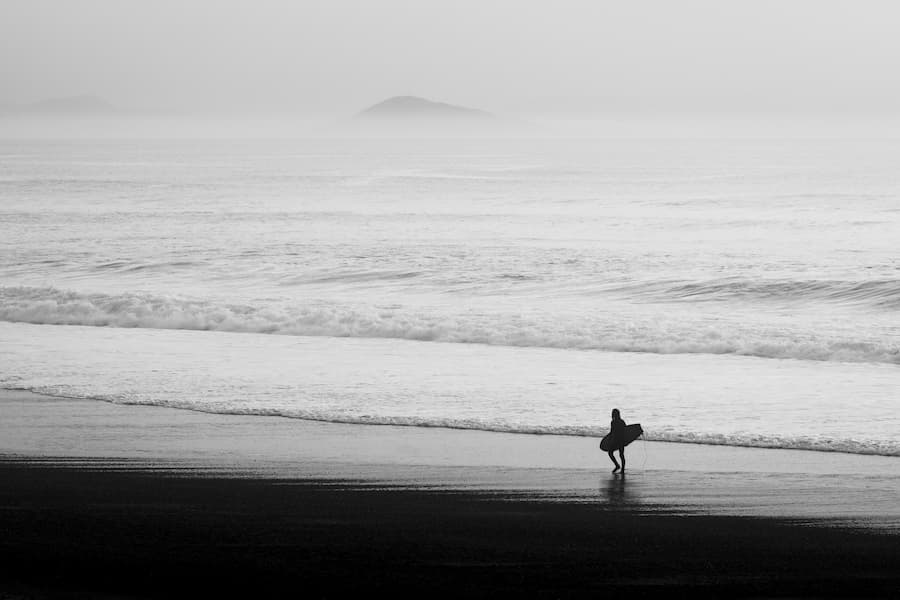
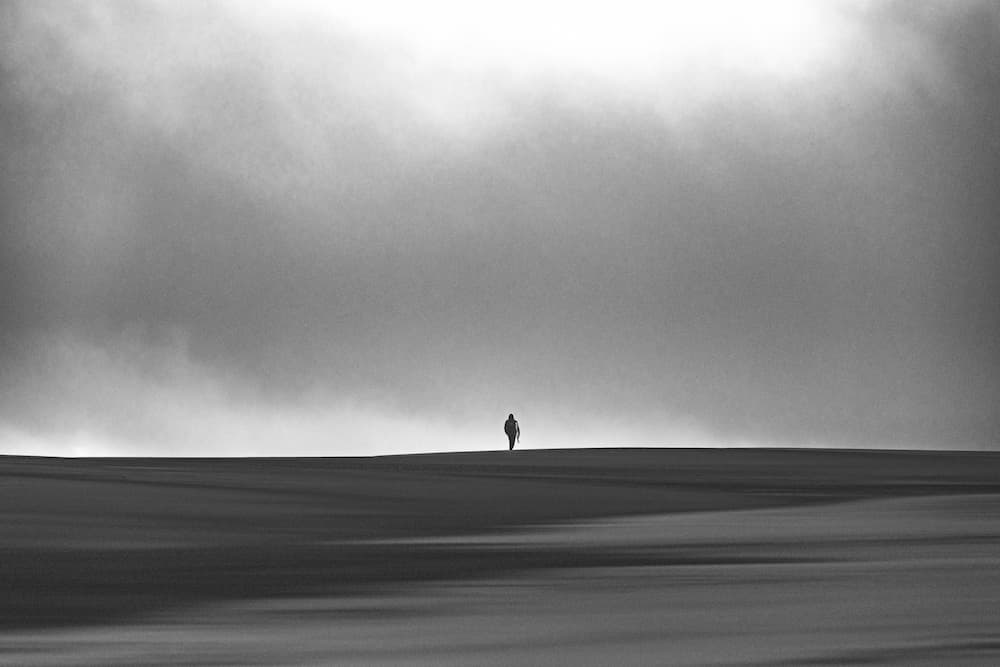
There was no time to precisely decide on the composition. However, I noticed the colors and I knew I wanted the water to be the background of my photo. Generally, I try to show the loneliness of a subject in the immensity of his environment. Therefore, also with this picture, I adjusted the focal length of my zoom so that the subject becomes as small as possible and that the horizon between the water and the sky does not appear.
The editing process wasn’t too lengthy. I began with my usual basic adjustments, focusing on highlighting the most dominant colors while maintaining consistency. I chose to desaturate the yellows and blues to achieve a more balanced look. I would say that this was the most vital step – the color management. I wanted to create a strong contrast between the dominant orange and black tones, so I desaturated the other colors that I didn’t want to appear in the final image. Finally, the ocean’s movement felt distracting and didn’t emphasize the subject as much as I wanted. So, I decided to apply a motion blur to isolate the surfer at the center of the image.
Overall, I wanted to create a strong contrast between the dominant orange and black tones, so I desaturated the colors I didn’t want to appear in the final image. As a result, I obtained an analogous color scheme where the colors in my palette are next to each other on the color wheel: 1c0f10, f49a53, c66236, f8d09b, and 783020.
This selection creates a harmonious look because the colors share a base, resulting in a more natural and pleasing effect:
1) To design an analogous palette, choose a base color, then add one or two adjacent colors on the color wheel, along with their variations in tints, shades, and tones.
2) Limit your palette to 2–4 colors to avoid overwhelming your image. Too many adjacent colors can dilute the harmonious effect.
3) Think about the mood you want to convey. Analogous palettes can range from warm (using yellows, oranges, and reds) to cool (using blues, greens, and purples). Choose colors that align with the emotion or atmosphere you want to evoke.
4) Lastly, consider a neutral to break up the color scheme or provide a resting point for the eyes.
As I am rather new to photography, I do not feel that I have a consistent or specific style yet. However, I am sure this will arrive naturally with practice. To me, I must listen to myself, in the sense that I do what I feel is aesthetic. By that means, I include personality in my photos, whether at the stage of shooting and framing or during the editing phase. Each person is unique and if you put a part of yourself in each photo, they will also be unique.
I aim to keep following this principle while I improve my photography techniques. Offering my best work possible at all times pushes me to progress and learn while remaining close to myself. And hopefully, one day, I can turn my passion into a living.

Join us in the Azores for a unique photo tour, where you’ll elevate your creative skills with expert guidance from Ronald Soethje, Bruno Ázera, and Nomadict.

In this article, Forest shares how years of chasing scale, silence, and raw landscapes shaped his approach to photography, from the deserts of Kazakhstan to the volcanic ridges of Iceland. He talks about how he uses light, texture, and vast negative space to create images that feel both intimate and overwhelming.

Simon shares the journey behind his photography, from early inspirations to field techniques, editing, and the story of the winning shot that shaped his path.

In this article, Miro shares how his love for cinematic music evolved into a deep passion for photography and how he uses light, color, and atmosphere to turn the streets of Prague into living film scenes.

In this article, Stefanie reveals how her background in physics sparked her passion for astrophotography and how she blends science with creativity to capture the beauty of the night sky. Readers will discover her approach to color, contrast, and editing, as well as her aurora photography workflow.

Spanish photographer Yhabril captures the profound connection between humans and the mountains that shaped him. Growing up in the Pyrenees, his work bridges outdoor sports, landscapes, and celestial scenes — often blending athletes, moonlight, and wilderness into striking visual stories.

In this article, Ariane shares how photography helped her navigate personal challenges, connect authentically with people and animals, and develop a philosophy rooted in empathy and artistic freedom. Readers will also discover her ethical approach to wildlife photography and her trusted equipment for both camouflage techniques and cameras.

Discover how to photograph Dutch tulip fields in their most magical light. From choosing the right gear and lenses to mastering composition, color, and aerial perspectives, this guide shares creative techniques to capture the beauty of the Netherlands’ tulips. Learn how light, color grading, and proportion bring emotion into every frame.