Photo tour in Azores, Portugal
Join us in the Azores for a unique photo tour, where you’ll elevate your creative skills with expert guidance from Ronald Soethje, Bruno Ázera, and Nomadict.
In this article, we delve into the inspiring journey of Alvaro, a former computer engineer who transitioned into a full-time landscape photographer and videographer. Through his reflections, Alvaro shares the challenges and triumphs of pursuing his passion, the evolution of his craft, and the deep connection he fosters with nature through his work.
At some point in my career, I realized I no longer wanted to spend 40 hours a week in an office, staring at a computer screen. It was a subtle yet profound shift, the kind that slowly dawns on you until it becomes impossible to ignore. I had already traveled around the world during holidays, balancing my work as a developer with my passion for photography in my free time. But as time went on, the idea of dedicating myself fully to capturing moments through photos and videos became more than just a distant dream—it became a necessity.
My love for photography began long before I studied Computer Engineering. I was 17 when I got my first camera, the kind everyone starts with—cheap, simple, but full of potential. I would roam my city, capturing moments just for fun. The idea of freezing a moment in time, and holding onto it forever, fascinated me. During my degree, I didn’t have much time to pursue photography seriously, but I kept at it when I could. It was when I moved to Barcelona after finishing my degree that things started to change. My best friend and I spent countless hours exploring the city, capturing its beauty through our lenses. Those days were filled with discovery, and it was then that I realized photography was something I wanted to pursue seriously.
Deciding to leave my job as a developer to become a freelance photographer and videographer was one of the hardest choices I’ve ever made. The financial aspect was especially daunting—giving up a steady paycheck in exchange for the uncertainty of freelancing felt like a huge risk. On top of that, there was the weight of all the time, effort, and money I had invested in my studies. It felt like I was turning my back on everything I had worked for. My parents were skeptical too. They had supported me throughout my education, and now I was telling them I wanted to pursue something entirely different. Not having their support in the beginning was tough, but over time, they saw that it was possible to make a living from photography and video, and now they support me in every decision I make.
When I first started, I knew that having the right equipment would be crucial to bringing my vision to life. I have to admit that I am a bit of a gear geek; photography and videography technology and equipment are my guilty pleasure. Over the years, I’ve put together a setup that I’m really proud of. I usually work with a couple of Sony Alpha A7IV bodies. It’s an excellent hybrid camera that delivers incredible quality in both photo and video. My go-to lens lineup includes 16-35mm, 24-70mm, and 70-200mm, which gives me the versatility to capture everything from vast landscapes to intricate details. I also use a Mavic 3 Pro drone for those shots that you just can’t get from the ground. Even though I’m not a huge fan of tripods, they’re essential for time-lapses and self-recording, so I always carry the lightest one I can find. And of course, ND filters are a must for shooting video during those super bright parts of the day.
One of the things I’ve realized is that no single place has had a significant impact on my work. Each destination I’ve traveled to has offered something unique, whether it’s the sweeping landscapes of remote deserts or the intricate details of bustling cityscapes.
Every place has its own beauty, its own challenges, and its own story. Each environment brings a different set of colors, textures, and atmospheres, and these experiences have shaped my vision and broadened my perspective. Every journey adds another layer to my understanding of the world and my craft. It’s not just about one singular impact—it’s about the cumulative effect of all these experiences, each contributing to the evolution of my artistic expression.
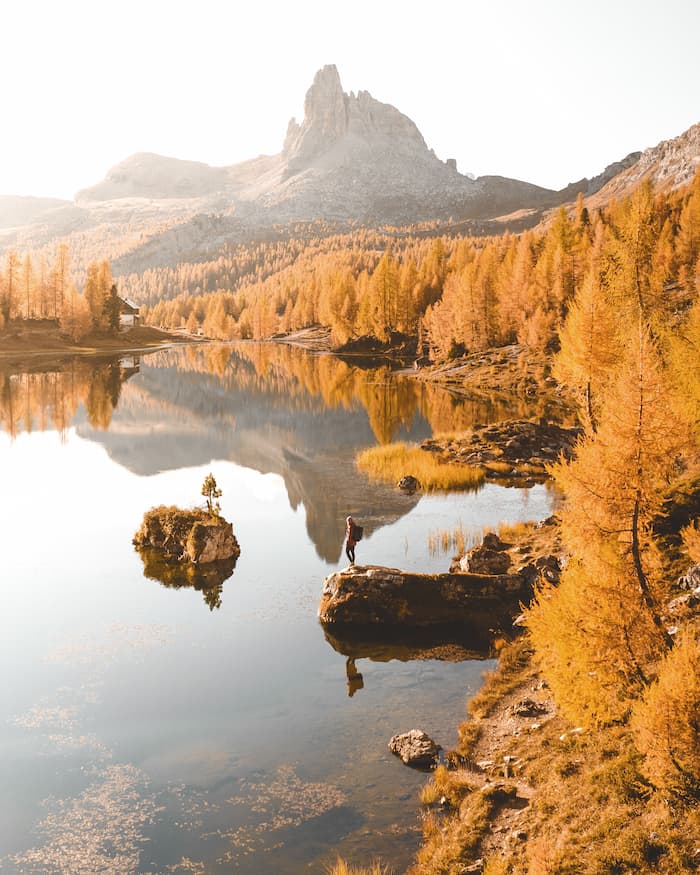
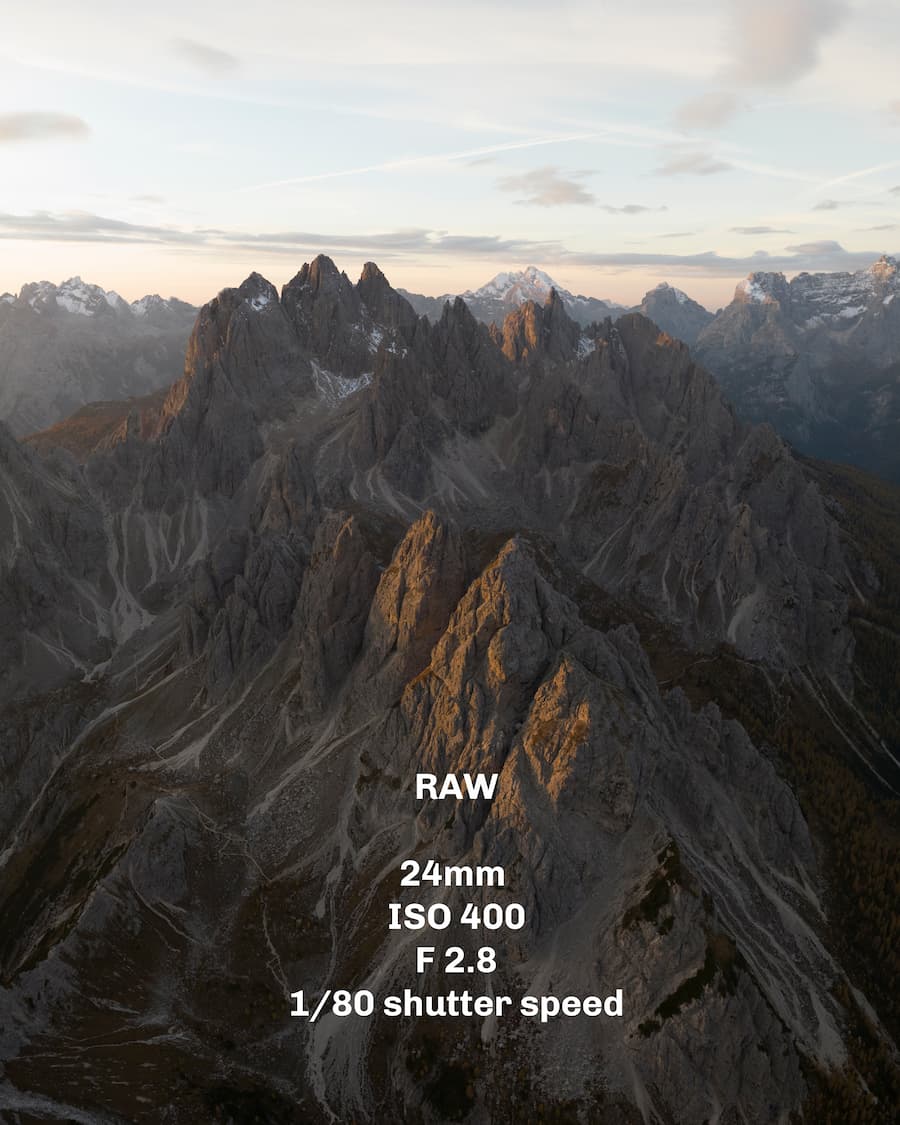
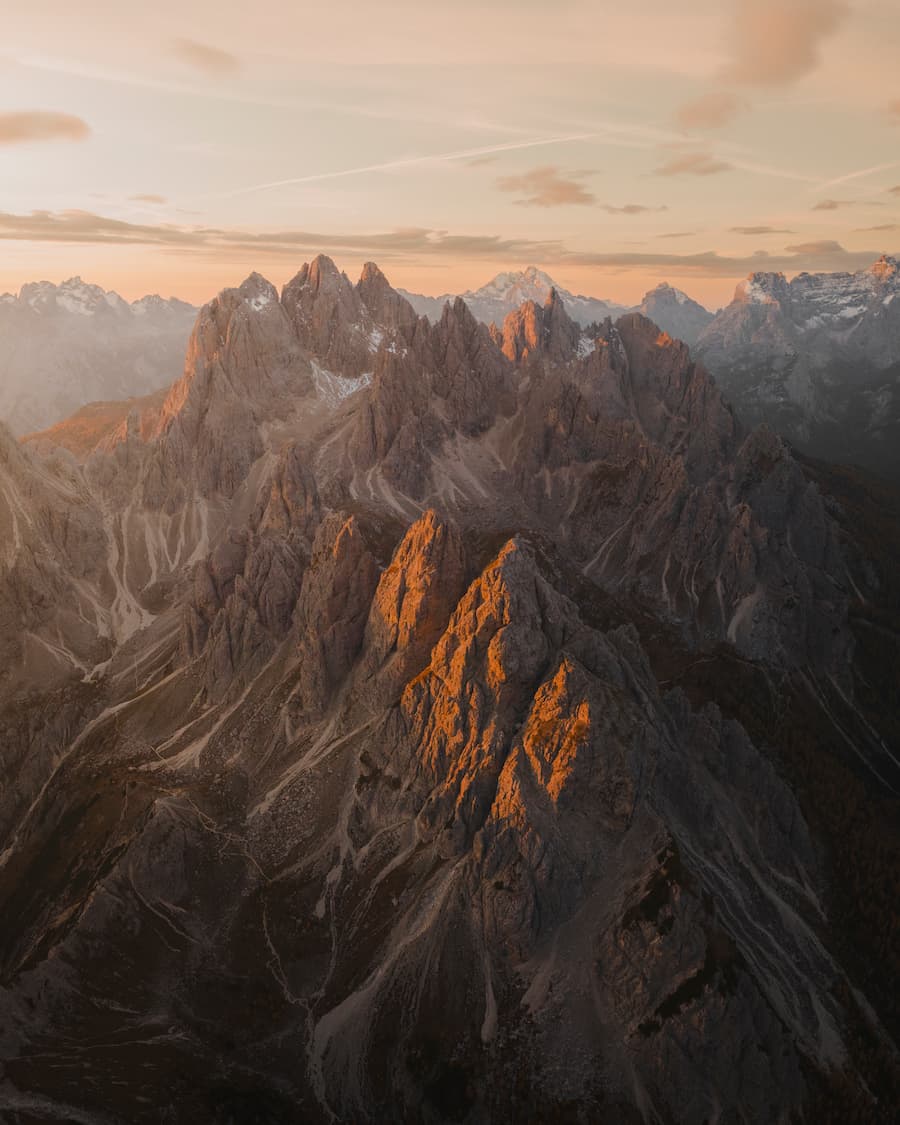
My photographic style is deeply rooted in my love for the raw beauty of nature. I pay close attention to light and composition, using them to accentuate the scene’s emotional and visual impact. This image from the Dolomites is a good example. Below, I share with you six steps to achieve rustic and vivid colors in your mountain images:
1) Camera settings:
24 mm
ISO 400
F 2.8
1/80 shutter speed
As a result, I obtained the following RAW colors:
3b3837: A deep, warm gray-brown.
211d1a: A very dark, almost black brown.
e9e9e5: A light, soft grayish-white.
6a6361: A medium, warm gray with brown undertones.
c7c2bd: A light, warm gray with beige undertones.
So I captured a mix of neutral and earthy tones, and to create a rich blend of earthy, warm tones with a slightly rustic touch, I followed these steps:
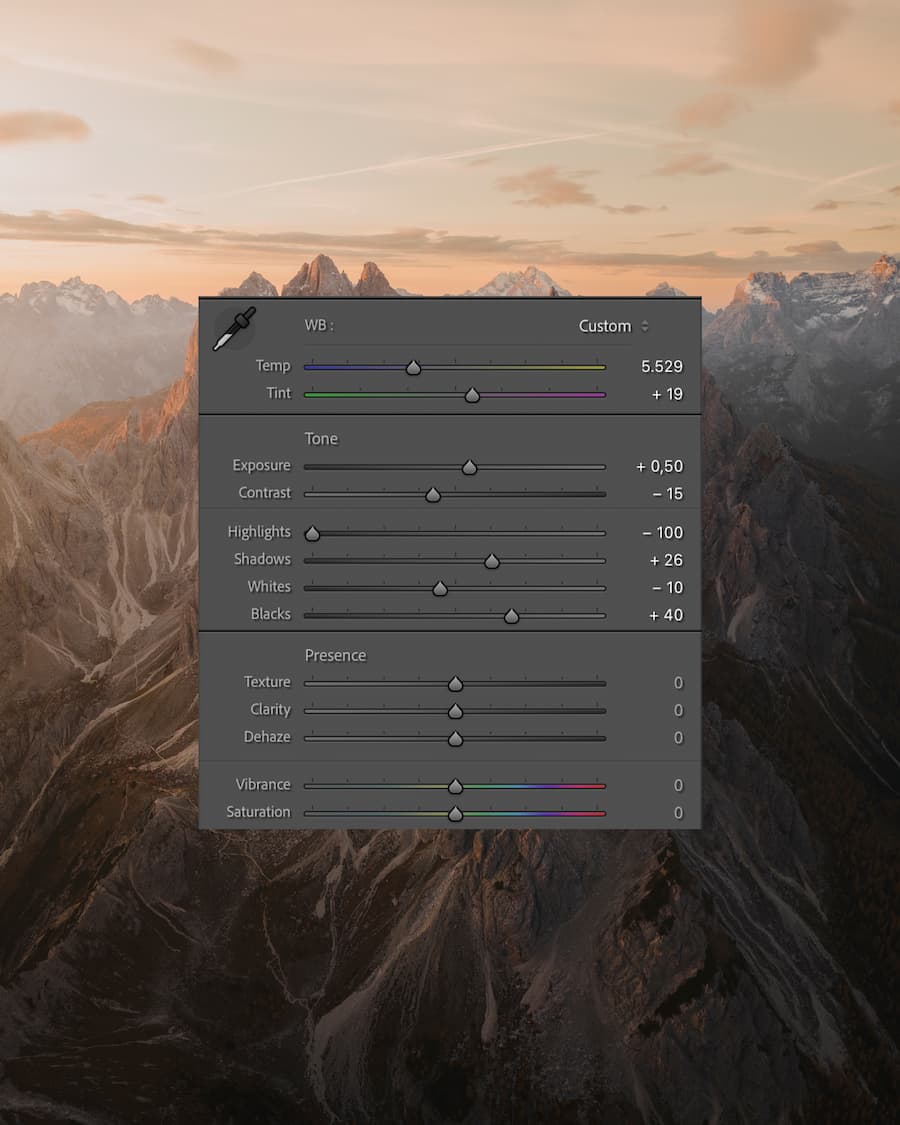
2) White balance:
Temperature 5.529
Tint +19
3) Tone
Exposure +0,50
Contrast -15
Highlights -100
Shadows +26
Whites -10
Blacks +40
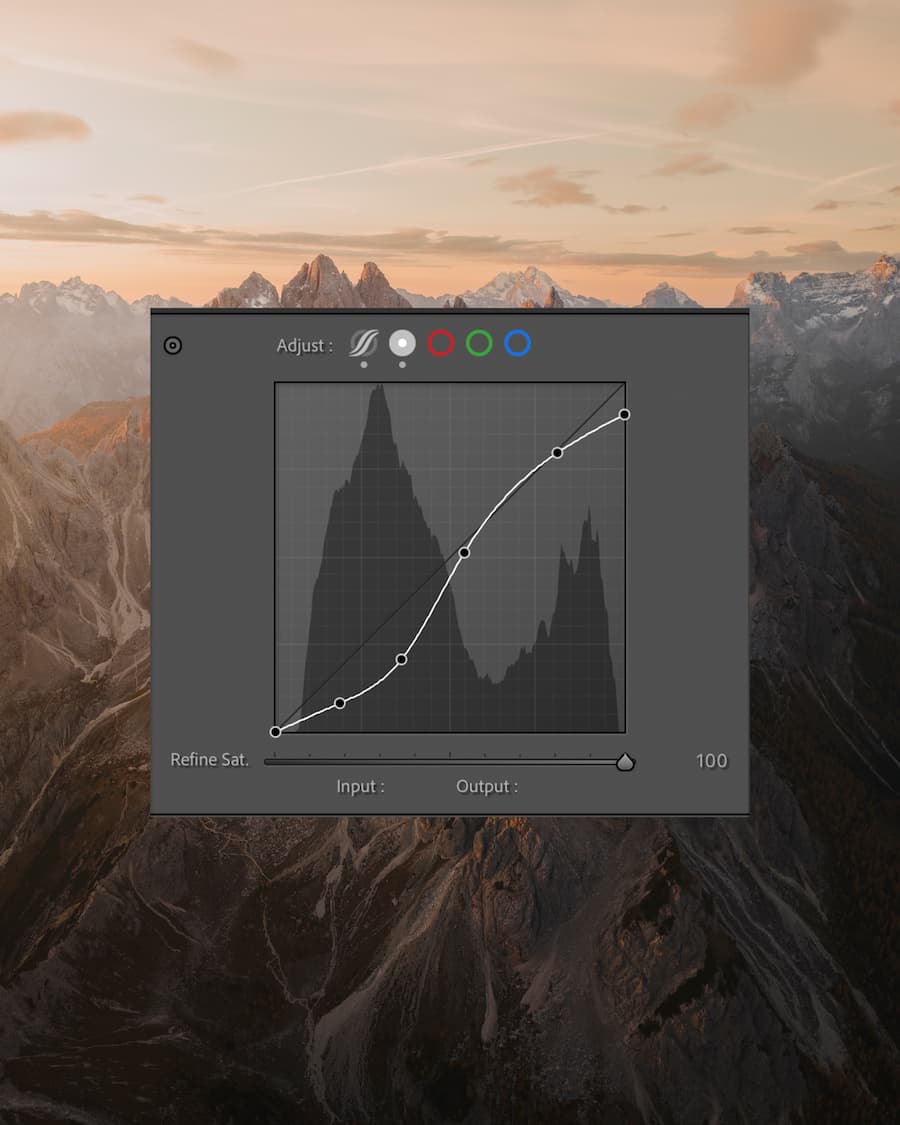
4) Cinematic S-Curve
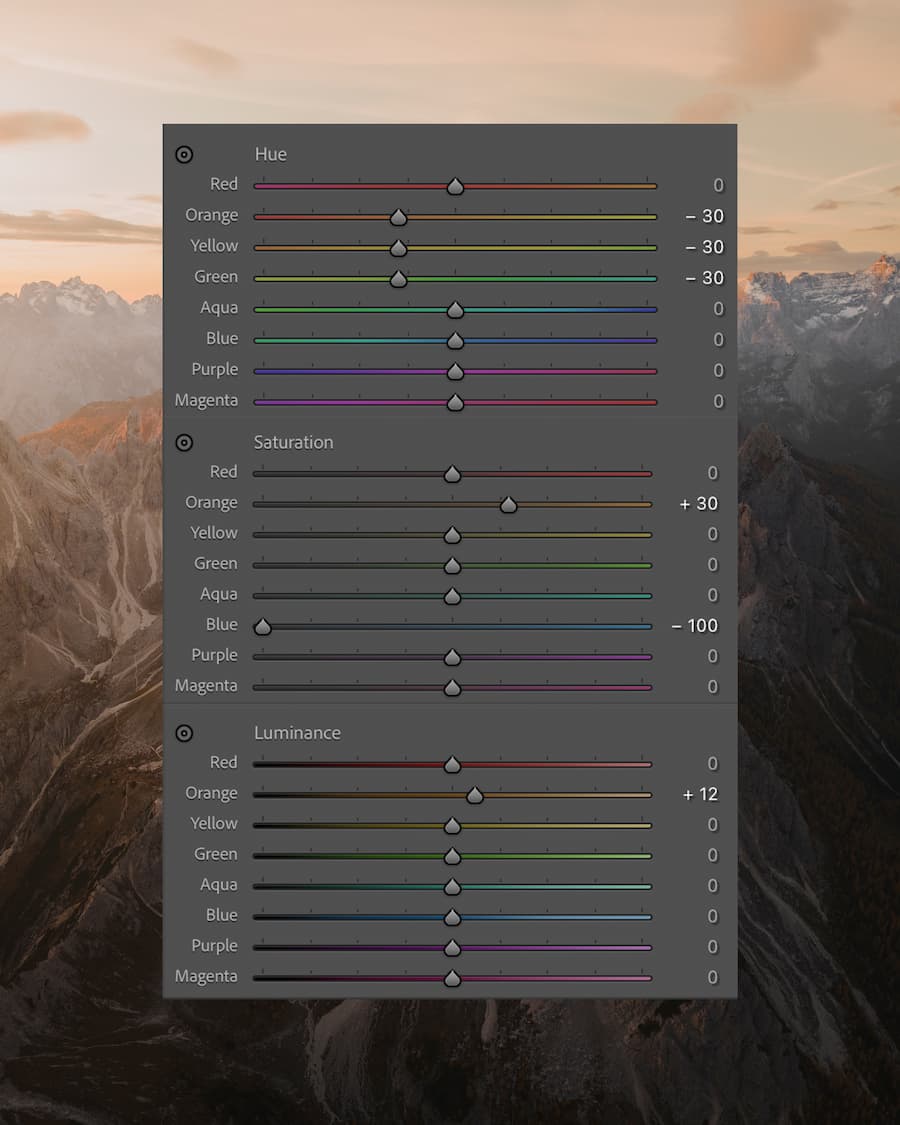
5) Color grading:
5.1) Hue
Orange -30
Yellow -30
Green -30
5.2) Saturation
Orange +30
Blue -100
5.3) Luminance
Orange +12
6) Masking:
I applied masks to the sky, mountain top, sunlit peaks, and the foreground to make the colors stand out. For the bottom left and right sides, I aimed to create a vignette effect, darkening these areas to draw attention to the center of the image.
New color palette:
As a result, I obtained a very dark brown with subtle warmth (241f1c), a light, warm beige with soft pink undertones (d6bba5), a medium-dark, warm brown (4c3b34), a muted, medium brown with gray undertones (7e665b), and a warm, rich brown with orange undertones (975832).
This palette has a warm, earthy feel with a sophisticated and slightly rustic touch. The darker tones provide depth and grounding, while the lighter colors add warmth and softness.
My journey as a photographer and videographer has been largely self-taught. I don’t have formal studies in photography or video; everything I’ve learned has come through trial and error. I’ve made countless mistakes, but each one has been a valuable lesson. One of the most effective ways I’ve learned is by studying the work of other creatives. Drawing inspiration from their achievements has often been the driving force that keeps me motivated and constantly striving to improve. This relentless pursuit of excellence is what fuels growth and helps me become better with each passing day.
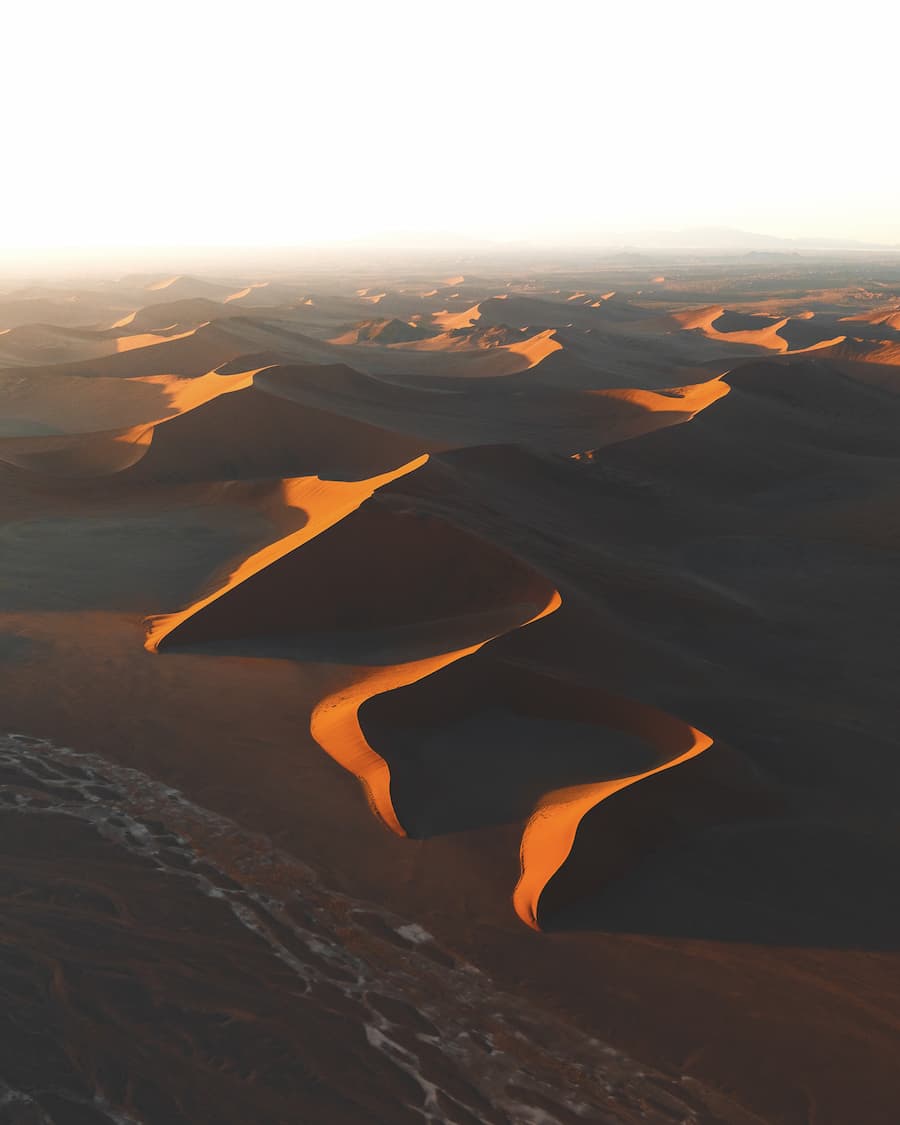
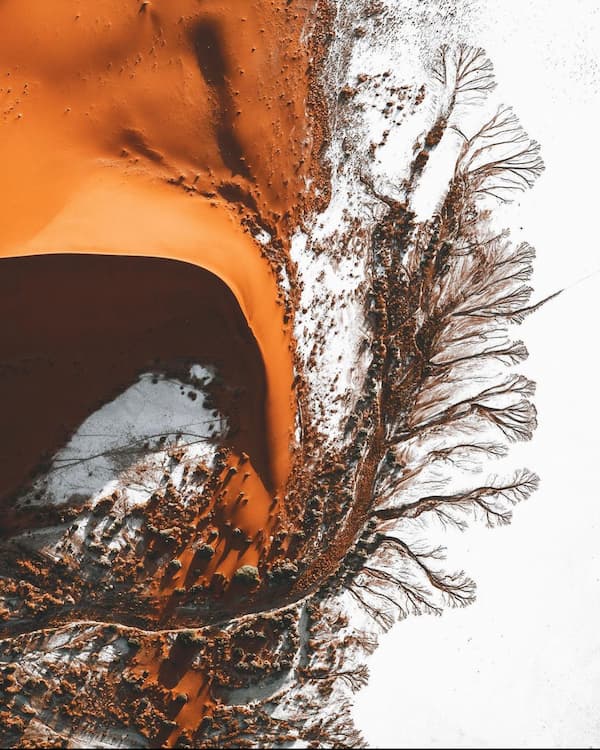
One of the projects I’m most proud of is the work I did in the desert in Namibia. That trip felt like a dream come true. I experienced the raw essence of wilderness, and I was alone in some of the most breathtaking places on Earth. It was an incredibly special experience. I remember feeling overwhelmingly happy, with every moment washing away the stress and anxiety that freelancing can bring. I was fully immersed in the present, and it felt like a profound, soul-healing journey. This trip translated into some of the most extraordinary photos I’ve ever taken.
As I look to the future, my journey as a photographer and videographer is poised for exciting evolution. I’m increasingly diving into the world of video, pushing the boundaries of my creative expression and exploring new dimensions of storytelling. This foray into video is not just about acquiring a new skill but about expanding my artistic horizon. I’m also eager to explore other photography styles, such as lifestyle and product photography, each offering its own set of challenges and opportunities. My goal is to continually evolve by blending traditional and emerging mediums, staying at the cutting edge of visual storytelling. By constantly seeking new experiences and embracing innovative techniques, I aim to push the limits of my craft and inspire others with fresh, compelling content.
If there’s one piece of advice I’d give to anyone considering a career like mine, it’s this: We have only one life to live. If you’re passionate about something, chase that dream with everything you’ve got. The journey will be challenging, and there will be both triumphs and setbacks, but the reward of doing something you truly love is worth every struggle. Embrace the journey, trust in your passion, and never be afraid to take that leap.

Join us in the Azores for a unique photo tour, where you’ll elevate your creative skills with expert guidance from Ronald Soethje, Bruno Ázera, and Nomadict.

In this article, Forest shares how years of chasing scale, silence, and raw landscapes shaped his approach to photography, from the deserts of Kazakhstan to the volcanic ridges of Iceland. He talks about how he uses light, texture, and vast negative space to create images that feel both intimate and overwhelming.

Simon shares the journey behind his photography, from early inspirations to field techniques, editing, and the story of the winning shot that shaped his path.

In this article, Miro shares how his love for cinematic music evolved into a deep passion for photography and how he uses light, color, and atmosphere to turn the streets of Prague into living film scenes.

In this article, Stefanie reveals how her background in physics sparked her passion for astrophotography and how she blends science with creativity to capture the beauty of the night sky. Readers will discover her approach to color, contrast, and editing, as well as her aurora photography workflow.

Spanish photographer Yhabril captures the profound connection between humans and the mountains that shaped him. Growing up in the Pyrenees, his work bridges outdoor sports, landscapes, and celestial scenes — often blending athletes, moonlight, and wilderness into striking visual stories.

In this article, Ariane shares how photography helped her navigate personal challenges, connect authentically with people and animals, and develop a philosophy rooted in empathy and artistic freedom. Readers will also discover her ethical approach to wildlife photography and her trusted equipment for both camouflage techniques and cameras.

Discover how to photograph Dutch tulip fields in their most magical light. From choosing the right gear and lenses to mastering composition, color, and aerial perspectives, this guide shares creative techniques to capture the beauty of the Netherlands’ tulips. Learn how light, color grading, and proportion bring emotion into every frame.