Photo tour in Azores, Portugal
Join us in the Azores for a unique photo tour, where you’ll elevate your creative skills with expert guidance from Ronald Soethje, Bruno Ázera, and Nomadict.
From Scottish highlands to Icelandic peaks, Christopher’s work reflects a connection to wild places and the unpredictable beauty of nature. In this piece, he shares how travel, chance, and a little push from his partner led to breathtaking images and unexpected recognition from National Geographic. He also shares his story behind the winning image of Best of the Week 14.
My dad had been a professional photographer for a good few decades; he focused on reportage and portraiture, and I helped him edit his images sometimes. So I was exposed to the photography world from a pretty young age and slowly started to want my own camera.
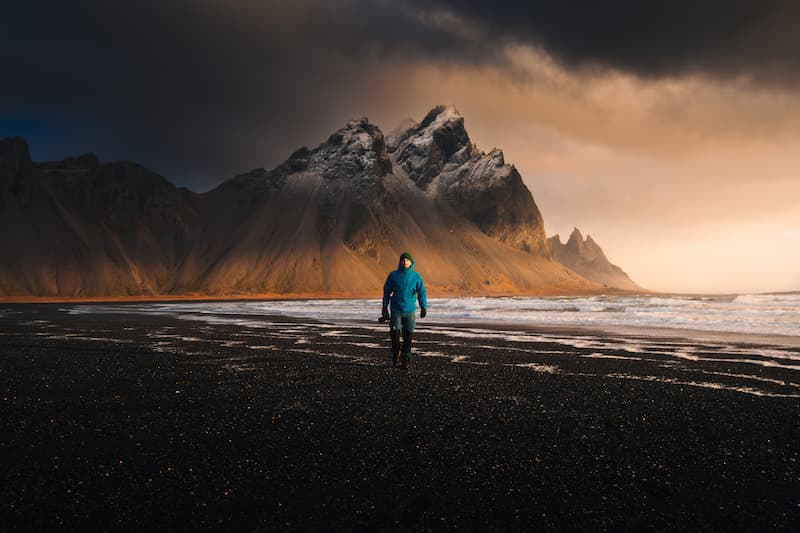
My love for travel comes from hiking and a slight obsession with mountains. It started with Scotland, where I traveled to first, and then Iceland and the Alps, and my pursuit to explore other countries never stopped. There’s something special about a snow-covered jagged mountain.
Shooting in the mountains requires special attention and care, especially in Winter and even more at elevation. Safety is always the top priority—no photo is worth risking your life. It can be hard to stay within safe limits when you are driven by your goals and ideas, however, it is key to remember that the mountains and the weather are not being considerate of you. I have learned that it can become dangerous from one moment to the next, and it’s been one of the many lessons the outdoors taught me.
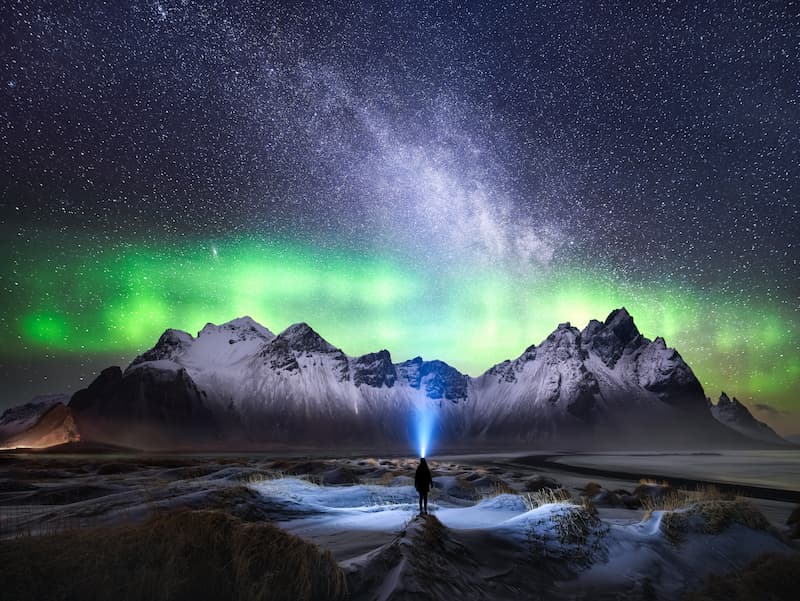
Another thing I realized is that planning is great, but it only gets you so far. You may spend hours questioning the conditions, forecasting weather, and debating whether to go out, but ultimately, you never can tell. It’s the journey and the process, not just the result. My image of the Northern Lights in Iceland that won the National Geographic Traveller Competition in 2024 illustrates this.
Having been to Iceland a few times and having a slight fixation with Vestrahorn, I dreamt of capturing it with the northern lights above, and I didn’t think it would happen until it did. The weather those days didn’t play out well, until 3 am on our last night in the area. We rushed out and drove to Vestrahorn. After getting out of the car and seeing a green glow, we had a little shriek with excitement. I spent two hours shooting images there, and one became the winning image in the National Geographic Traveller competition last year. A competition that I wasn’t going to enter until I was more or less forced to… Fate, maybe?
It is a perfect example of a planned, yet unplanned night that gave me an opportunity I grabbed with both hands to make something special. So, nothing ventured, nothing gained, and that can be said for the competition entry too. You never regret going out once you are out, and you will forever wonder ‘what if’, if you don’t. Also, tiredness is temporary, a photo lasts forever. Waking up in the early hours of the morning may be a little rough at times, but you’ll never look back and wish you’d stayed in bed instead.
Similarly, you have your camera gear to use and take with you on your journey, not to store, so it stays like new for the next decade. It is good to look after it, but don’t baby your camera equipment – use it in all weather, conditions, and environments. My first few years in photography were spent cleaning sensors and lenses as if they were made of silk, until I understood that this wasn’t making my adventures and my photos any better.
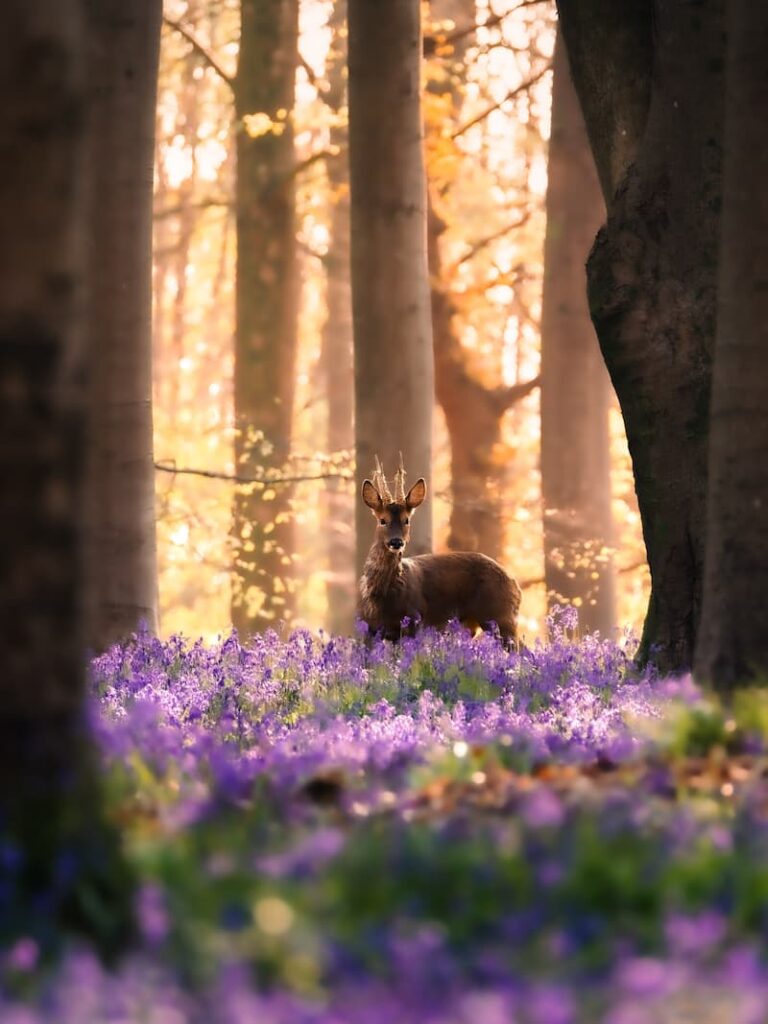
At the start of bluebell season, a friend told me about a very small, quiet woodland that’s only 30 minutes from me, so I took my camera and headed there. It was a sunny morning, and I was aiming to get there just as the sun rose above the horizon, casting long shadows on the tall trees. I was standing, sipping a coffee, when I saw two deer run past about 50m away; they didn’t see me at first. For once, I had the right lens on the camera, a 100-400mm. I made sure I didn’t panic and got down low to accentuate the blurred flowers in the foreground that were picking up the sunlight. I managed to take 4-5 decent shots before they left. It’s of course rare to see a deer, especially in these conditions with bluebells that only last a few weeks per year.

I used the trees on either side to confidently frame the deer, drawing you right to the subject. On top of this, the blurred foreground flowers add some softness and further push you into the centre of the picture. This made sure that the composition was strong, and I wouldn’t need to do too much editing.
The soft morning colourful light catching the flowers was naturally present in the image, so with editing, I wanted to accentuate the warmth and softness whilst leaving the deer as sharp as possible. I further brightened the light parts of the deer, mostly around the edges, to enhance the contours and shape. Letting the highlights clip slightly really helps to accentuate the sun and brightness, but of course, it has to be selective.
Colour choice, softness, and brightness are the key parts of the image. A deer is an animal that conveys a sense of happiness, and bluebells and morning sun only add to this feeling. So it made sense to me to draw on those parts of the image.
I want to stay true to myself in my work, with every image, and to continue shooting the subjects and places that truly inspire me. Being out in nature, in the mountains and forest with a camera and some hiking boots is my place in the world.
I’d love one day to lead or participate in a workshop in some of the places I know best, helping other people get the most out of their trip and sharing a little local and photographic knowledge. So, in the future, I want to incorporate my passion for photography and travel into an educational endeavor that can help others learn and grow.

Join us in the Azores for a unique photo tour, where you’ll elevate your creative skills with expert guidance from Ronald Soethje, Bruno Ázera, and Nomadict.

In this article, Forest shares how years of chasing scale, silence, and raw landscapes shaped his approach to photography, from the deserts of Kazakhstan to the volcanic ridges of Iceland. He talks about how he uses light, texture, and vast negative space to create images that feel both intimate and overwhelming.

Simon shares the journey behind his photography, from early inspirations to field techniques, editing, and the story of the winning shot that shaped his path.

In this article, Miro shares how his love for cinematic music evolved into a deep passion for photography and how he uses light, color, and atmosphere to turn the streets of Prague into living film scenes.

In this article, Stefanie reveals how her background in physics sparked her passion for astrophotography and how she blends science with creativity to capture the beauty of the night sky. Readers will discover her approach to color, contrast, and editing, as well as her aurora photography workflow.

Spanish photographer Yhabril captures the profound connection between humans and the mountains that shaped him. Growing up in the Pyrenees, his work bridges outdoor sports, landscapes, and celestial scenes — often blending athletes, moonlight, and wilderness into striking visual stories.

In this article, Ariane shares how photography helped her navigate personal challenges, connect authentically with people and animals, and develop a philosophy rooted in empathy and artistic freedom. Readers will also discover her ethical approach to wildlife photography and her trusted equipment for both camouflage techniques and cameras.

Discover how to photograph Dutch tulip fields in their most magical light. From choosing the right gear and lenses to mastering composition, color, and aerial perspectives, this guide shares creative techniques to capture the beauty of the Netherlands’ tulips. Learn how light, color grading, and proportion bring emotion into every frame.